A ladder that is slightly too short, too light for the task or awkward to position can slow a job down before work has properly started. Knowing how to choose worksite ladders means looking beyond the maximum height on the label and matching the ladder to the work, the user and the conditions on site.
For tradespeople, the right choice supports safer, more productive work across repeated jobs. For serious DIY users, it prevents the common mistake of buying a domestic ladder that is not suited to regular renovation, exterior maintenance or workshop use. Start with the task, then work through height, ladder type, material, load capacity and safety features.
Start with the job, not the ladder
The first question is where and how the ladder will be used. Changing a light fitting indoors, painting a stairwell, reaching a gutter or accessing a roofline all place different demands on the equipment. A ladder is best suited to short-duration, low-risk work where the user can maintain a secure handhold and avoid overreaching.
If a job involves heavy tools, forceful work, extended periods at height or frequent sideways movement, a platform, tower or other access equipment may be the better choice. Ladders are practical and portable, but they are not a substitute for a stable working platform when the task calls for one.
Consider the surface as well. A level concrete floor, a paved driveway, soft ground and uneven site terrain each affect stability. Outdoor work can also bring wet conditions, wind and mud into the decision. Selecting a professional-quality ladder is only part of the equation – it must be possible to position and secure it correctly where you need it.
Choose the right worksite ladder type
Different ladder designs solve different access problems. Buying one versatile model can make sense for occasional work, but professionals often benefit from choosing a dedicated ladder for the jobs they carry out most often.
Step ladders for self-supported access
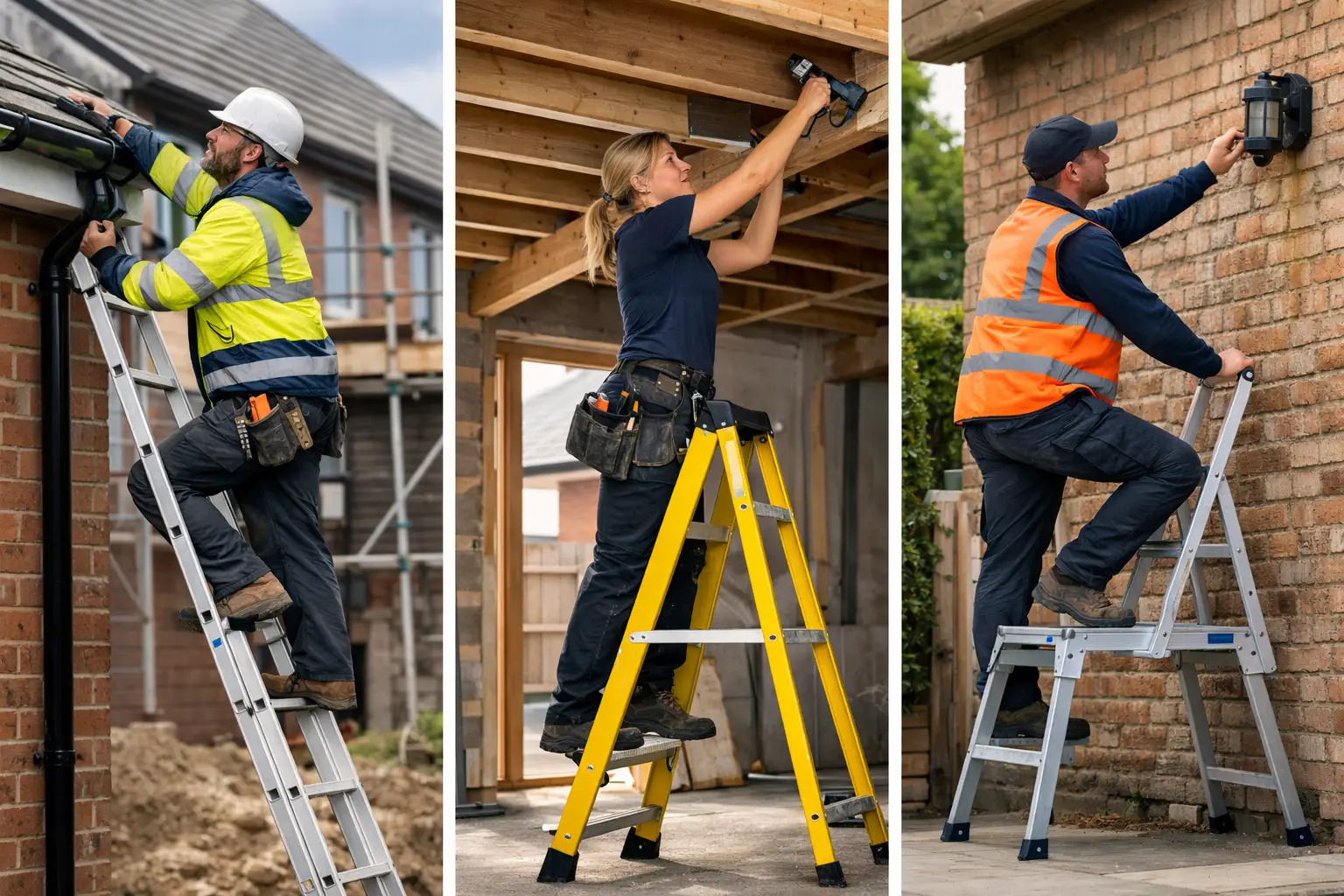
Step ladders are the practical choice when there is no suitable wall or vertical surface to lean against. They are widely used by electricians, decorators, fitters and DIY renovators for indoor jobs such as drilling, trimming, wiring and painting.
Look for a wide, stable base, secure spreader bars and non-slip feet. A platform step ladder can offer a more comfortable standing position for light work, provided the platform is designed for that purpose. Do not stand on the top cap or use a step ladder folded shut as a leaning ladder unless the manufacturer specifically confirms that configuration is permitted.
Extension ladders for greater reach
Extension ladders are designed for reaching higher external areas, including roofs, upper-storey windows and guttering. They are usually more practical than a single-section ladder when storage space and transport matter.
The overlap between sections reduces the usable working length, so do not select solely by the fully extended measurement. Check the manufacturer’s stated maximum working height and ensure the ladder will extend sufficiently above the landing point when access is required. For roof access, the ladder should project above the point of support to provide a secure handhold when stepping on or off.
Combination ladders for flexible jobs
Combination or multi-purpose ladders can convert between configurations such as a step ladder, extension ladder and stairwell ladder. They are useful for maintenance teams, tradespeople moving between varied properties and DIY users who need flexibility without filling the garage with several ladders.
The trade-off is weight and complexity. A multi-purpose design may be heavier to carry and take longer to set up than a dedicated ladder. Check that all locking hinges are easy to inspect, engage positively and remain clear of dirt or debris during use.
Telescopic ladders for transport and storage
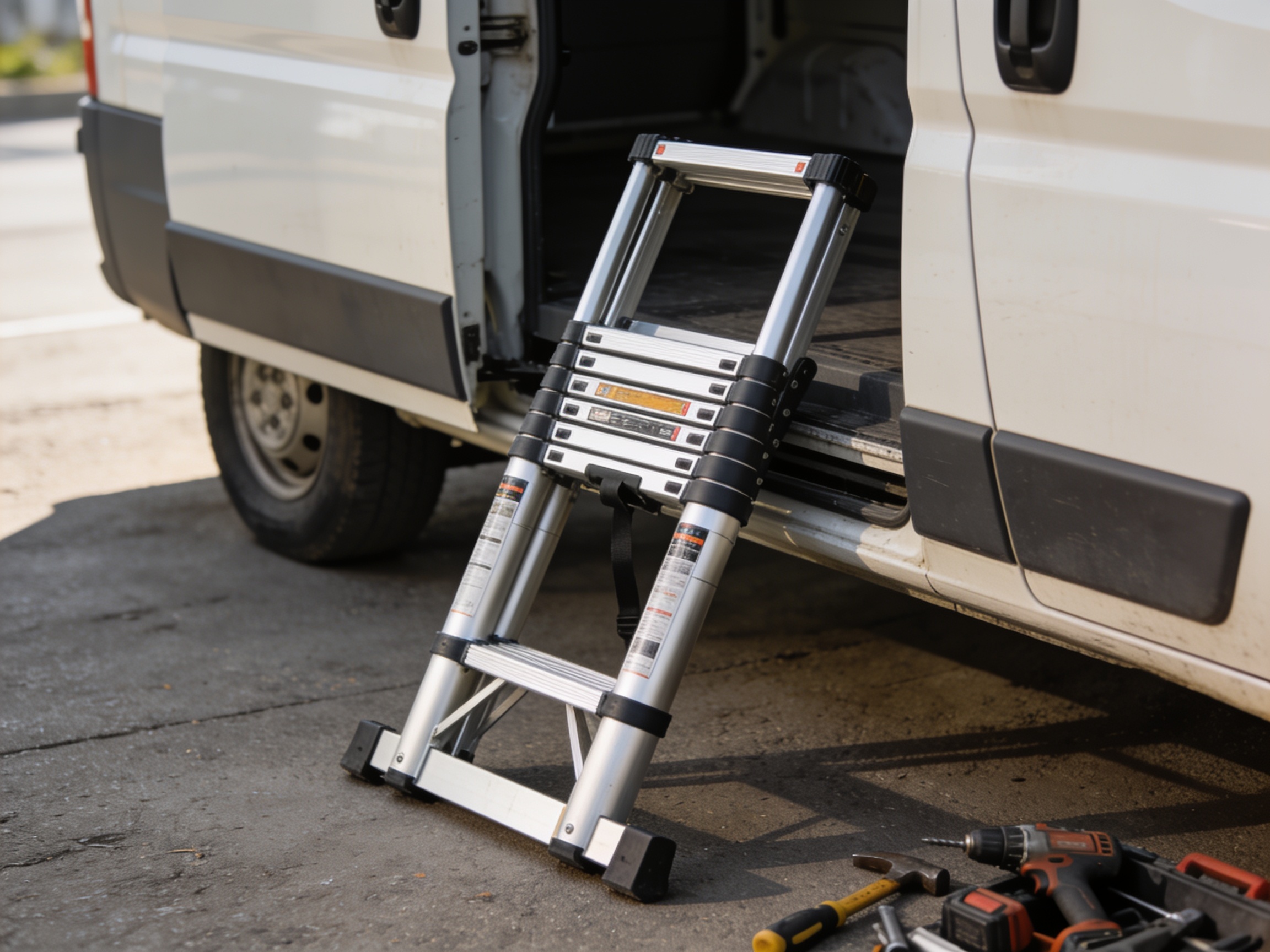
Telescopic ladders pack down to a compact size, making them useful for vans, small workshops and jobs where access equipment must be carried through narrow spaces. Quality matters particularly here. Choose a model with reliable locking mechanisms, clear indicators and a proven duty rating rather than treating compact storage as the only priority.
They are not the first choice for every demanding site task. If the ladder will be used daily, handled heavily or exposed to rough conditions, a conventional professional extension ladder may offer the simpler and more durable option.
Get the working height right
Working height is the height at which you can carry out the task comfortably, rather than the height of the ladder itself. A user should not have to stand on the upper rungs, stretch above shoulder height or lean sideways to reach the work.
Measure the access point from the ground, then allow for your standing position and the safe area at the top of the ladder. Product descriptions may show ladder length, platform height, reach height or maximum working height. These figures are not interchangeable, so compare like with like before ordering.
For leaning ladders, the angle of placement matters too. A common guide is a one-in-four angle: set the base out by one unit for every four units of vertical height to the support point. This gives a stable working angle and reduces the chance of the ladder slipping or flexing excessively.
Select a material suited to the environment
Aluminium is the most common material for professional ladders because it is strong, relatively lightweight and easy to transport. It suits general building, decorating, maintenance and external work, especially when frequent carrying is involved. Its main limitation is electrical work: aluminium conducts electricity and should not be used where there is a risk of contact with live electrical sources.
Fibreglass ladders are the preferred choice for electricians and anyone working near electrical installations because the material is non-conductive when clean and dry. They are generally heavier and may cost more than equivalent aluminium models, but that extra weight is often justified by the application. Fibreglass is also a sound option for industrial environments where durability and insulation properties are a priority.
Timber ladders still have niche uses, but they are less common for modern worksite buying. They require careful storage and inspection because moisture, splits and damage can affect their performance. For most trade and serious DIY applications, aluminium or fibreglass provides a more practical starting point.
Check the rating, standard and build quality
A ladder’s load capacity must cover more than body weight. Include clothing, tool belts, hand tools and any equipment carried during the climb. Avoid working at the maximum stated load wherever possible, particularly when the ladder will see regular site use.
Look for ladders manufactured to the appropriate EN 131 standard for professional or non-professional use, depending on the product and application. For trade use, choose a model clearly intended for professional duty rather than a light domestic design. Product labels and specifications should make the intended use, maximum load and relevant standard easy to identify.
Build details often reveal whether a ladder is ready for repeated work. Check the quality of the feet, rung connections, spreaders, locking catches and stabiliser bar. Deep, slip-resistant rungs improve footing, while a wide base or stabiliser can make a significant difference on hard surfaces. Replaceable feet are also valuable on ladders used regularly outdoors, where wear is inevitable.
Think about transport, storage and handling
The best ladder on paper is of little use if it is too cumbersome to get into a van, carry through a property or store securely. Check the closed length, folded depth and overall weight before choosing. A long extension ladder may deliver the reach you need, but it may require roof-rack transport and two-person handling.
For mobile trades, a lighter aluminium step ladder or compact combination ladder can save time across several call-outs. For fixed workshop or site use, extra weight may be worthwhile if it delivers a wider base, stronger construction and greater confidence under regular use.
Store ladders where they are protected from impact, damp and excessive heat. Do not stack heavy materials on them or leave them where vehicles can knock them over. Proper storage extends service life and makes damage easier to spot before the next job.
Inspect before every use
A quick inspection should be routine, particularly on shared sites or busy trade jobs. Check that rungs are clean and secure, feet are intact, locking mechanisms engage fully and there are no bends, cracks, splits or significant corrosion. On fibreglass models, look for surface damage and contamination.
Never make improvised repairs with tape, wire or drilled fixings. If a ladder is damaged, remove it from use until it has been assessed or replaced. It is a straightforward precaution that protects the user and everyone working below.
Before climbing, place the ladder on firm, level ground and keep the base clear of cables, tools and loose materials. Maintain three points of contact when climbing, face the ladder and keep your belt buckle between the stiles rather than reaching out to the side. Where site conditions require it, secure the ladder at the top, bottom or both.
A dependable worksite ladder should make access easier without becoming the weakest part of the job. Choose the right style and height, invest in professional-grade construction where the work demands it, and inspect it as carefully as any other essential piece of site equipment. That approach gives you a ladder ready to support safer, more confident work from the first climb onwards.

Safe use: the 1-in-4 rule and pre-use checks
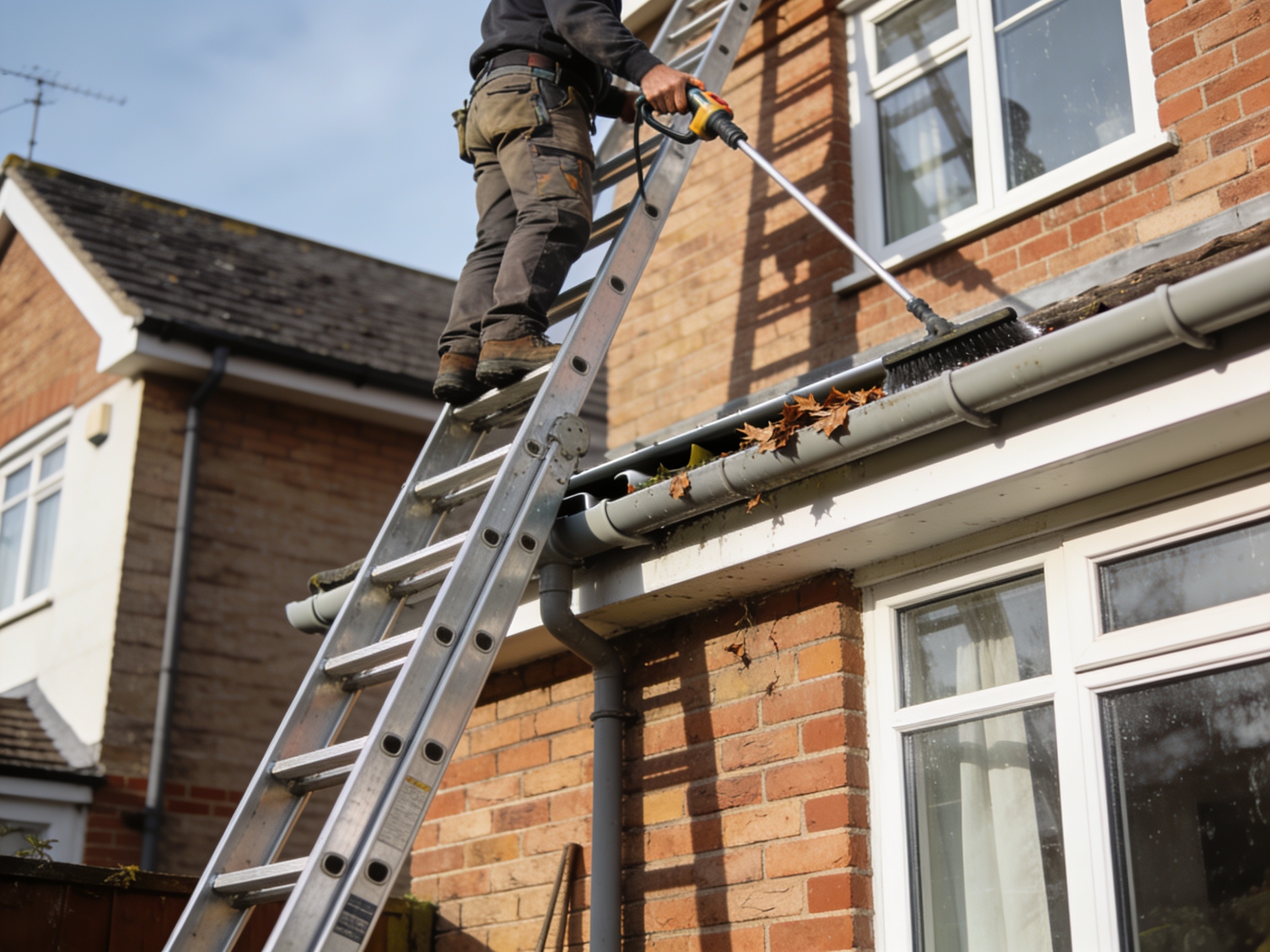
A well-chosen ladder is only safe if it is set up and used correctly. The HSE's 1-in-4 rule is the standard for leaning ladders: for every 4 units of height, the base should sit 1 unit out from the wall – roughly a 75-degree angle. Too shallow and the ladder can slip outward; too steep and it can tip backward.
Before every use, check the stiles are not bent or damaged, the feet grip properly and are not worn smooth, rungs are secure and free of oil or debris, and any locking mechanisms on a combination or extension ladder engage fully. A ladder that fails any of these checks should be taken out of use, not risked.
The HSE also recommends limiting continuous ladder use for a single task to around 30 minutes where a safer alternative (such as a podium or tower) is practical, and always maintaining three points of contact while climbing.
For more on kitting out a wider trade or DIY toolkit, our guides to choosing the right drill bits and an angle grinder cover the tools most likely to be used from the top of one of these ladders, and our tool chest buying guide covers keeping everything organised in between jobs.