Plunge Saws
Compared on price, power and value, with prices checked daily against Amazon UK. Not sure where to start? Our buying advice is further down the page.
-

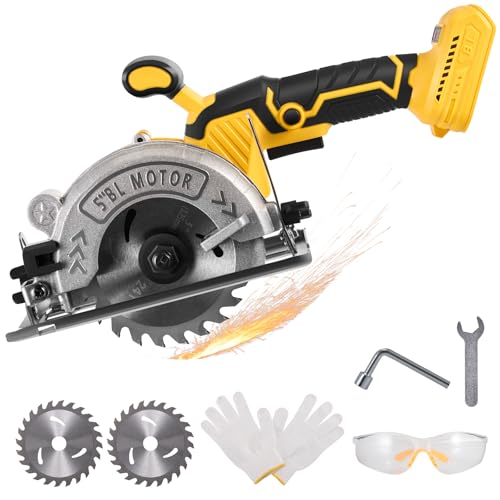
5'' Cordless Circular Saw for Dewalt Battery,Brushless Mini Circular Saw with 2 Blades,Adjustable Cutting Angle, Max Cutting Depth 1.28""(45°),1.6""(90°),for Cutting Wood,Plastic,Metal (No Battery)
£58.99 -
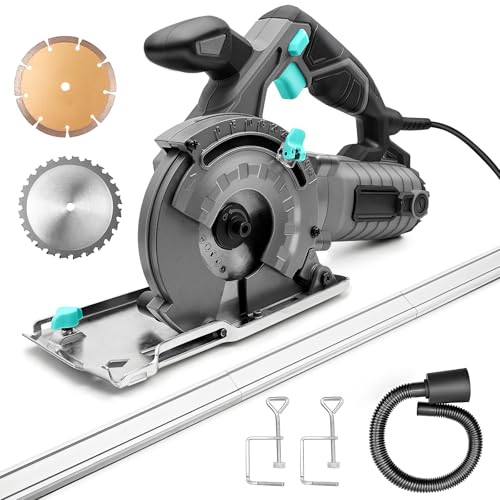
BlueMars Plunge Saw Circular Saw, 1000W 5300RPM Table Track Saw with 125mm 24T TCT Blade & Diamond Blade, 3X 40cm Tracks Guide Rail, Scale Ruler, Cutting Depth 42mm, for Wood, Tile, Plastic & Metal
£69.99 -
Dewalt DCS520NT 54v XR FLEXVOLT Cordless Plunge Saw – Bare Tool + 2 Guide Rails
£601.99 -
DEWALT DCS520T2 54V Flexvolt 165mm Plunge Saw with 2 x 6.0Ah Batteries & Charger in Case with Accessories
£767.00 -
DEWALT DWS520KT 240V Plunge Saw with 2 x 1.5m Guide Rails Connector & Bag
£849.00 -
Dewalt DWS520KT-GB Plunge Saw with TSTAK Box
£394.99 -
DEWALT Heavy-Duty Worksite Equipment for Industrial Professionals for Rapid Material Removal Featuring 5.0cm Height
£628.99 -
Draper 1200W Plunge Saw 230V | 700mm Guide Rails | 165mm Blade Diameter Mitre Saw| 5200rpm No Load Speed | Electric Powered 2m Cable | 57341
Original price was: £139.61.£119.00Current price is: £119.00. -
Einhell Cordless Mini Circular Saw 18V Power X-Change, 89mm Hand-Held Rotary Saw With 2 Blades For Cutting Wood and Plastic, Without Battery TE-CS 18/89 Li Solo
Original price was: £109.95.£76.95Current price is: £76.95. -
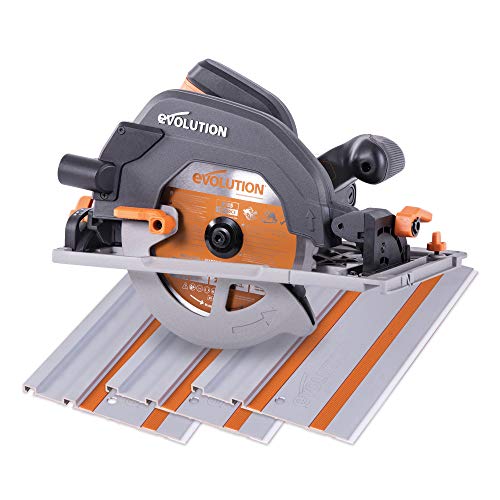
Evolution Power Tools R185CCSX Circular Saw With 1020 mm 3-Piece Track | Multi-Material Blade, Cuts Wood, Metal, Plastic & More | Incl Dust Port Adapter | 185mm (230v)
£116.00 -
Excel 165mm Plunge Saw 1200W/240V with Guide Rail Set
Original price was: £129.00.£125.00Current price is: £125.00. -
Festool 576706 Plunge-Cut Saw TS 55 FEBQ-Plus 240V, 208.0 mm*331.0 mm*211.0 mm
£650.99 -
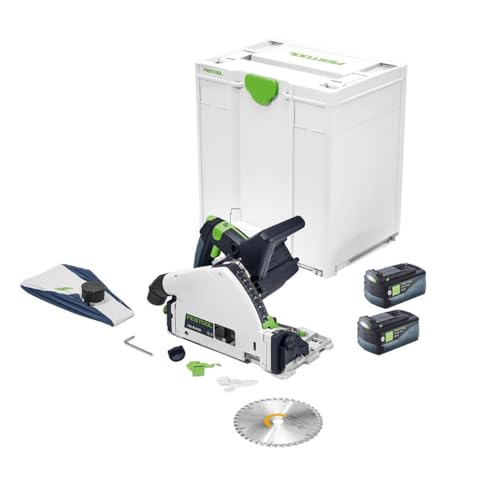
Festool Cordless Plunge-Cut Saw TSC 55 KEB-Basic
£606.49 -
Festool Cordless Plunge-Cut Saw TSC 55 KEB-Basic-5,0
Original price was: £647.99.£590.46Current price is: £590.46. -
KATSU Compact Circular Saw Plunge Cut with Track Guide Rail 600W 230-240V 7400rpm 85mm 0-45° + Mitre Base + 3 Extra Blades (Diamond, HSS, and TCT) 101788
£69.99 -
Lumberjack Plunge Saw 1200W Track Saw for Woodworking 1400mm Guide Rails
Original price was: £119.99.£109.99Current price is: £109.99. -
Makita DSP600ZJ 36V Brushless Plunge Saw with 2 x 5Ah Batteries, Charger & Rail
£649.95 -
Makita SP6000J1 110 V Plunge Saw – Blue
£340.99 -
Triton 1400W Track Saw Kit 185mm 4pce TTS185KIT (534156)
£294.00 -
WORX WX437 XL 800W Worx Saw Compact Circular Saw, Orange, 42.5 mm
£89.55






What makes the best plunge saw UK fitters and DIYers rely on
A plunge saw (often called a track saw) runs along a guide rail and drops into the work from above, giving clean, splinter free edges on worktops, doors and sheet materials. Here are the features worth comparing before you buy.
Blade size and depth
The 165mm plunge saw is the standard size for kitchen fitters and joiners, with enough depth for 38mm and 40mm worktops in a single pass. Larger models suit thick timber and fire doors, while smaller compact units are lighter and handy for flooring and panelling.
Rails, connectors and clamps
Accuracy comes from the rail as much as the motor. Many kits include 2 x guide rails of around 1.4m or 1.5m with a connector, which lets you join them for full length sheets. Rails from the same brand usually fit each other, so check compatibility if you’re adding to an existing set. A clamp set holds the rail firmly on narrow or slippery boards, and the splinter strip along the rail edge shows you exactly where the blade will run.
Corded or battery
Corded 240V and 110V models give unlimited runtime for big jobs. Battery models, from 18V up to 36V and 54V platforms, are quick to set up anywhere on site, and you can often buy the body only if you already own the batteries. Our corded vs cordless saws guide covers the trade offs, and our Makita track saw review looks at a top choice for trade and DIY.
Plunge saws FAQs
Is a plunge saw better than a circular saw?For long, dead straight edges and cuts in the middle of a panel, yes. A standard circular saw is quicker for rough work. See our circular saw guide for comparison.
What else should I look for?Dust extraction, a riving knife, a scoring function for laminates, and a carry case or bag for the rails all save time on the job.