Turn up to a consumer unit change or a first-fix install without the right kit and the job slows down fast. If you are asking what tools do electricians need, the short answer is a dependable mix of insulated hand tools, accurate testing equipment, practical power tools and storage that can cope with daily use.
That said, the exact setup depends on the work. A domestic installer, maintenance electrician and industrial contractor will all overlap on the basics, but not every tool earns its place in every van. The best kit is the kit that keeps you safe, works reliably under pressure and saves time without compromising the finish.
What tools do electricians need for everyday work?
For most electricians, the core kit starts with insulated hand tools. These are not just nice to have. They are central to safe working around live circuits, fault finding and general installation work. A good set usually includes insulated screwdrivers, combination pliers, long nose pliers, side cutters and cable cutters. Wire strippers are equally important, especially when you are working through repetitive terminations and want clean, consistent results.
Screwdrivers deserve a bit more attention than they often get. Electricians tend to use them constantly, so comfort, tip strength and grip matter. A cheap driver that rounds off quickly or slips under pressure becomes frustrating very quickly. The same goes for pliers. Better cutting edges, stronger pivots and a more controlled grip pay for themselves in daily use.
You will also need a reliable tape measure, a utility knife and a level. These are simple tools, but they make the difference between a rushed install and a neat one. Chasing boxes, setting sockets, running containment and fitting accessories all rely on accurate marking out. If the basics are poor, the final job usually shows it.
Testing tools matter as much as fitting tools
Ask any experienced electrician what tools do electricians need, and testing equipment will be near the top of the list. Hand tools help you install. Test tools help you work safely and confirm the job is right.
A voltage tester is one of the main essentials. It gives you a quick and dependable way to verify whether a circuit is live. Many electricians also carry a proving unit to confirm the tester itself is working before and after use. That extra step is not wasted time. It adds confidence where it matters most.
A multimeter is another key part of the kit, particularly for fault finding and electrical diagnostics. Depending on the work you do, you may also need clamp meters, socket testers and continuity testers. For inspection and testing work, a multifunction tester becomes far more relevant, especially when certification is part of the job.
This is one area where buying purely on price can be a false economy. Accuracy, durability and ease of reading all matter. Test tools get handled frequently, moved around site and relied on in critical moments. A trusted brand with a solid reputation usually makes more sense than cutting corners.
Power tools that earn their place
Not every electrical job needs a van full of power tools, but some cordless equipment saves a huge amount of time. A combi drill is usually the first choice because it covers so many tasks. Drilling into timber, masonry and metal, fixing back boxes, mounting trunking and installing clips all become quicker with the right drill and bit set.
An impact driver is also useful, especially if you handle fixings all day. It reduces strain, speeds up repetitive driving and tends to perform better with longer screws and tougher materials. For site work and commercial fit-outs, it can become one of the most-used tools in the kit.
Beyond that, it depends on the jobs you take on. Some electricians will benefit from an SDS drill for chasing and heavy masonry work. Others may want an oscillating multi-tool for cutting access panels, trimming trunking or making neat adjustments in awkward spaces. A work light is another underrated addition, particularly in lofts, under floors, plant rooms and partly finished properties where visibility is poor.
Cordless platforms matter here. If you are investing in battery-powered tools, sticking with one battery system often makes more sense than spreading across multiple brands. It keeps charging simple, reduces spare battery clutter and usually lowers the cost of expanding your kit over time.
Cutting, fixing and cable work
Electrical work involves more cutting and preparation than many buyers first expect. That is why cable cutters, stripping tools and crimping tools are so important. They improve control and consistency, especially when you are working with different cable sizes and accessory types.
For electricians doing a lot of containment or board work, step drills and hole saws are especially useful. They make cleaner holes in enclosures, trunking and panels, and they help avoid the rough finish that comes from forcing the wrong bit through the material. A good selection of bits and blades is just as important as the drill itself.
Fish tapes, draw wires and cable rods also deserve a place in many setups. If you are routing cable through cavities, ceilings or conduit, these save time and reduce frustration. On straightforward domestic jobs they may come out less often, but on trickier installs they can be the difference between a smooth cable run and a drawn-out struggle.
Access and site essentials
Electricians rarely work at one ideal height. You might be at floor level fitting sockets in the morning and up at ceiling level for lighting circuits later in the day. A dependable step ladder or platform is therefore part of the wider toolkit, even if buyers do not always think of it first.
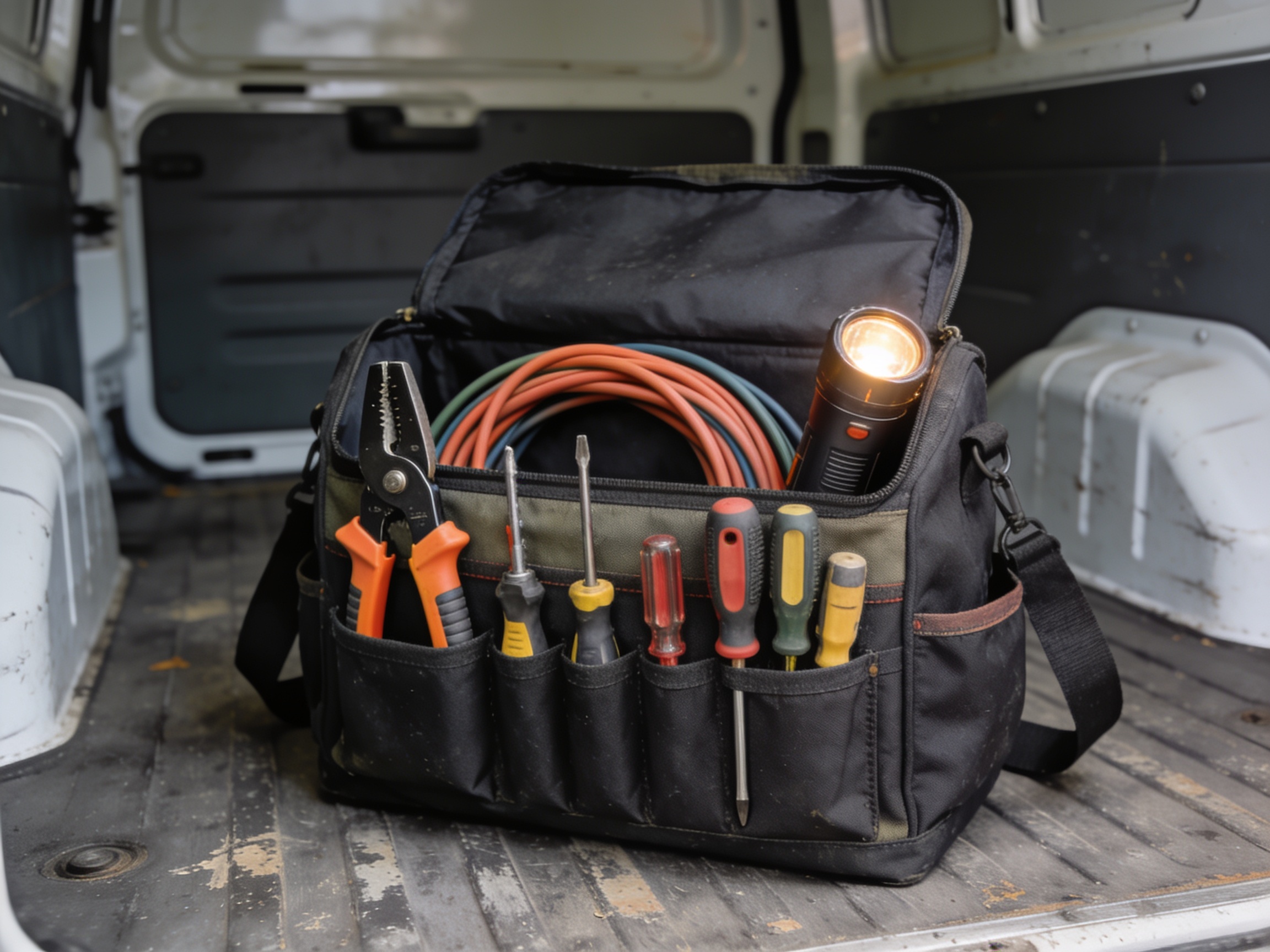
The same goes for storage. Good tool bags, boxes and organisers are not just about tidiness. They protect test gear, keep accessories easy to find and help you move efficiently between jobs. Small consumables such as terminals, fixings, clips, grommets and connectors can waste time when they are loose, damaged or buried under heavier tools.
PPE also belongs in the conversation. Safety glasses, gloves, knee pads and suitable workwear are not accessories in the casual sense. They support safer, more practical working on real jobs. Depending on the environment, dust protection and hearing protection may also be needed.
The difference between trade kit and DIY kit
There is some overlap here, because serious DIY users can justify better tools if they take on regular electrical work within legal limits. But for trade users, reliability and repeat performance matter more than headline specifications alone.
A professional electrician will usually need stronger build quality, more accurate test equipment and tools that stay comfortable through a full day of use. Battery runtime, charger speed and long-term durability become more important when the kit is earning money. For occasional domestic tasks, a lighter setup may be enough, but even then it is worth avoiding the very cheapest options in anything safety-related.
That is where recognised brands tend to stand out. The appeal is not just the name. It is the consistency, battery support, accessory range and confidence that the tool will perform when you need it to. For buyers comparing options, that can make the difference between replacing a tool in six months and relying on it for years.
Building your electrician’s tool kit in the right order
If you are starting from scratch, it makes sense to build the kit around the jobs you do most often. Begin with insulated hand tools, a voltage tester, a multimeter, measuring tools and a quality combi drill. Those cover a large share of everyday work.
After that, add the tools that solve recurring problems. If you regularly work with masonry, an SDS drill may be the next sensible step. If you spend more time on fixings and board installs, an impact driver may deliver better value first. If cable routing is a constant challenge, rods and draw tools become more important.
It is also worth budgeting for accessories from the start. Drill bits, driver bits, hole saws, blades and batteries are what keep the main tools productive. A premium drill with tired batteries and worn accessories rarely feels premium on site.
What tools do electricians need before buying more?
Often, the better question is not what tools do electricians need in general, but what tools do they need next. Buying too broadly can leave you with expensive kit that does not get used enough. Buying too narrowly can mean repeat trips back to the van, slower installs and a less professional finish.
A practical buying approach is to focus on safety first, then speed, then convenience. That means test gear and insulated hand tools come before specialist extras. It also means choosing equipment that fits the type of electrical work you actually carry out, rather than buying for every possible future scenario.
For trade users and serious DIY buyers alike, the aim is simple. Choose tools that are dependable, comfortable in hand and ready for real jobs, not just the shelf. Get the essentials right first, build around a trusted cordless platform where it makes sense, and you will tackle the next job with far more confidence.
VDE insulated tools and testing essentials explained
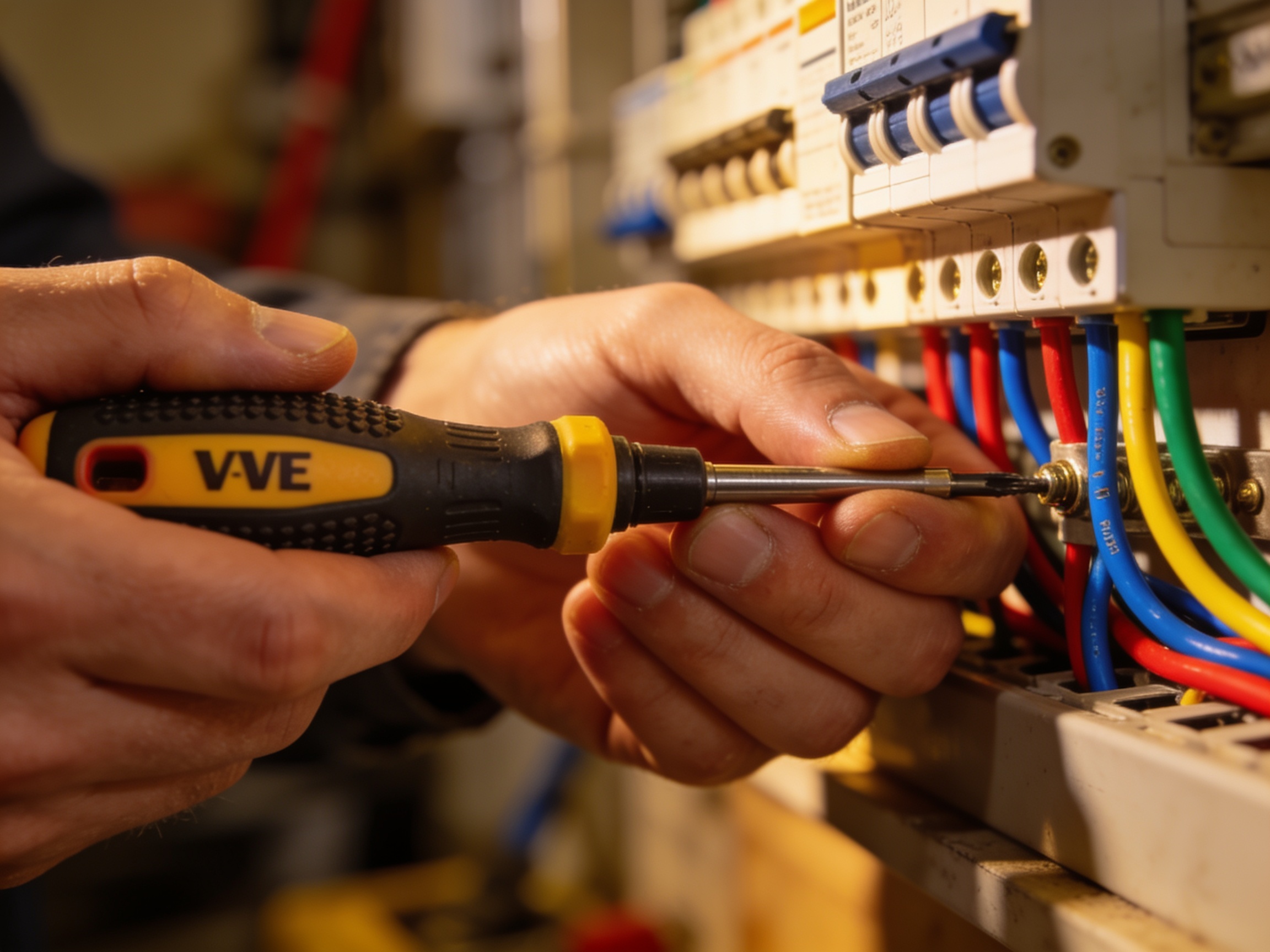
Before anything else, it is worth being specific about insulation ratings, because this is where corners get cut and it matters more than almost any other buying decision an electrician makes. VDE-rated hand tools are tested and certified to 1000V AC, and every insulated screwdriver, plier and cutter in a proper kit should carry that marking. A tool without it is not a safe substitute, whatever it looks like on the shelf.
Insulated screwdrivers are the tool electricians reach for most, so grip comfort and tip precision matter alongside the insulation rating itself. A decent VDE screwdriver set covers slotted and Phillips profiles across a range of sizes, with a double-layer insulated shaft rather than a single dipped coating.
Insulated pliers – combination, long nose and side cutters – see the same daily use and the same safety requirement. Look for a matched set from one manufacturer rather than mixing brands, since grip geometry and cutting edge quality vary more than buyers expect.
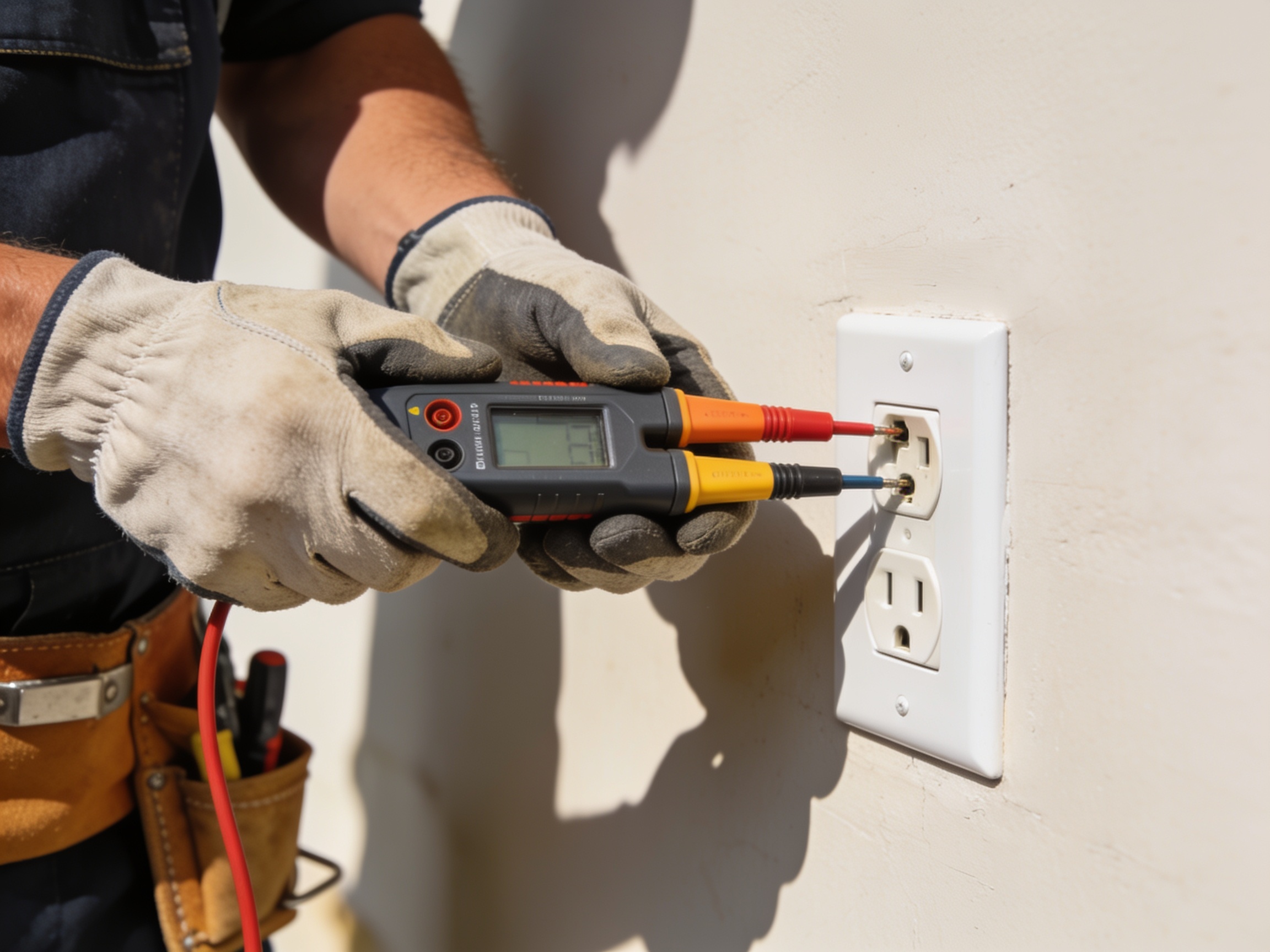
On the testing side, a two-pole voltage and continuity tester is the standard for confirming a circuit is dead before you work on it – non-contact testers are useful as a first check but should never replace a proper two-pole tester for safe isolation. A multimeter or multifunction tester covers fault finding, and for certification work, a dedicated multifunction installation tester becomes essential rather than optional. Whatever you buy, always carry a proving unit so you can confirm the tester itself is working correctly before and after every isolation.
For the rest of the kit around your test gear and insulated tools, our guides to drill bits for every material, choosing worksite ladders and the tool chest buying guide cover the access, drilling and storage side of a day-to-day electrician's setup.