Cordless Inspection Cameras
Compared on price, power and value, with prices checked daily against Amazon UK. Not sure where to start? Our buying advice is further down the page.
-

BFSYRR80th Birthday Balloons, 80th Anniversary Decorations, 30pcs 10" Red White Blue Latex Balloon Set for Garden Table Indoor Outdoor Party
£46.99 -
Bosch inspection camera UniversalInspect (Ø8mm endoscope camera color images with flexible 0.95m length and integrated memory function, in cardboard box)
Original price was: £86.00.£72.99Current price is: £72.99. -
Bosch inspection camera UniversalInspect (Ø8mm endoscope camera color images with flexible 0.95m length and integrated memory function, in E-Commerce cardboard box)
Original price was: £88.99.£61.79Current price is: £61.79. -
Bosch Professional Inspection Camera GIC 12V-4-23 C (cable length: 150 cm, Orientation Function “Up Indication”, high resolution display: 4.3’’ screen, 800x480px, in carton box)
Original price was: £214.98.£180.99Current price is: £180.99. -
Bosch Professional Inspection Camera GIC 12V-5-27 C (cable length: 150 cm, Orientation Function AutoUp, high resolution display: 5’’ screen, 1280×720 px, in carton box)
Original price was: £303.60.£248.99Current price is: £248.99. -
Endoscope Inspection Camera, AOPICK 4.3'' IPS Screen 1080P HD Borescope Inspection Camera with 8 LED Lights, Handheld IP67 Waterproof Drain Camera, 16.5ft Semi-Rigid Cable, Tools &Gadgets for Men
Original price was: £39.99.£28.04Current price is: £28.04. -
Endoscope Inspection Camera, blayram 4.3'' IPS Screen 1080P HD Borescope Inspection Camera with Lights LED, Articulating Handheld IP67 Waterproof Drain Cameras, 16.5ft Semi-Rigid Cable
£22.99 -
Professional Product Model 1920065
£202.99


Choosing the right inspection camera
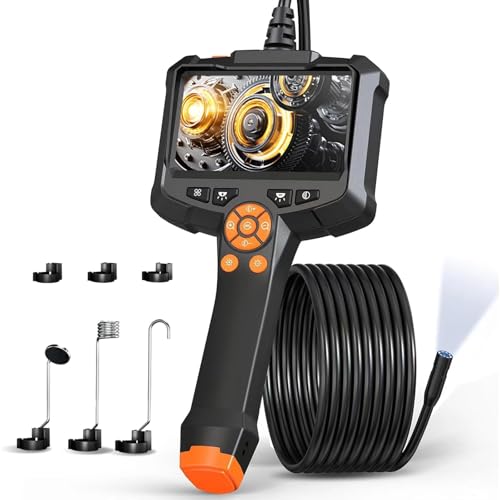
An inspection camera, sometimes called an endoscope or borescope, puts a small camera and LED lights on the end of a cable so you can see inside drains, wall cavities, engine bays and under floors without pulling anything apart. For plumbers, electricians, mechanics and anyone chasing a leak or a lost cable, it can save hours of guesswork and a lot of unnecessary damage.
This range includes trade models from Bosch Professional alongside handheld budget options. Here is what to compare before you buy.
Screen, resolution and image quality
Most handheld inspection cameras have a built-in screen of around 4 to 5 inches. A larger, higher resolution screen makes it easier to spot hairline cracks, corrosion or a cable label in a dark void. Adjustable LED brightness matters too, because too much light can wash out shiny pipework while too little leaves you squinting at shadows. Some models can also save photos or video, which is handy for showing a customer or keeping a record of the job.
Cable length, diameter and flexibility
Think about where you will use it. A short, thin probe of around 1m suits wall cavities, behind kitchen units and engine work. Longer semi-rigid cables of several metres are better for drains and under-floor runs, as they hold their shape when you push them along. A smaller head diameter, often around 8mm, gets through tighter gaps and existing holes, so you can often avoid drilling at all.
Orientation, waterproofing and toughness
Image orientation features keep the picture the right way up as the cable twists, which makes a real difference when you are trying to work out where you are inside a pipe. If you plan to look into drains, wet traps or tanks, check the camera head is waterproof, often shown as an IP67 rating. Remember that usually applies to the head and cable, not the handset.
Battery and platform
Some trade inspection cameras run on a 12V tool battery, which is convenient if you already own tools on the same system. Others use built-in rechargeable cells or AA batteries. If you are building up a set of cordless tools, see our guide to building a cordless tool kit or browse the wider cordless power tools range.
Inspection camera FAQs
Can I use an inspection camera to look inside a wall? Yes. Drill a small hole or use an existing socket or switch box opening, then feed the probe in. Always isolate the circuit first if you are working near electrics.
Are inspection cameras useful for drains? They are, as long as you choose a waterproof head and a long enough semi-rigid cable. For long sewer runs, a dedicated drain survey camera is the better tool.
Do I need a model that records? Not for simple checks, but recording is useful for trades who need to show evidence of a fault or report back to a client. Electricians may also find our guide to electricians’ tools helpful.