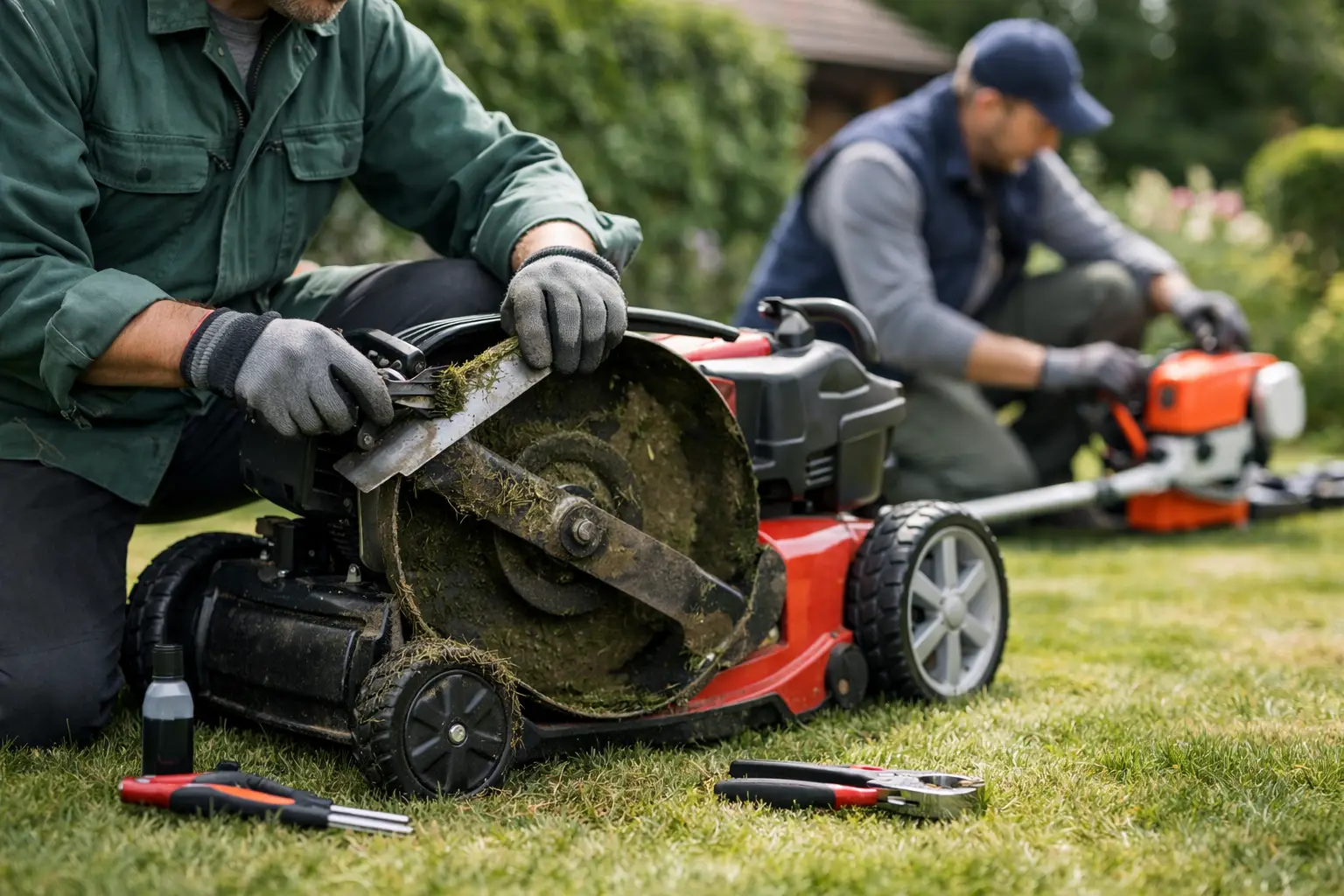
A mower that starts reluctantly after winter, a strimmer line that keeps snapping, or a hedge trimmer that chews rather than cuts usually has the same cause: routine care has been put off. Knowing how to maintain garden machinery protects the investment you have made in dependable equipment and helps ensure it is ready when the weather gives you a window to get outside.
For trade users, landscapers and committed DIY gardeners alike, maintenance is less about spending hours in the workshop and more about a few consistent checks. Clean machinery works more efficiently, sharp cutting parts leave a better finish, and early attention to worn components can prevent a costly repair at the busiest point of the season.
How to maintain garden machinery after every use
The best time to inspect garden machinery is just after use, before grass clippings, sap and damp soil have dried onto it. Switch off, isolate the power source and allow hot engines or cutting components to cool before starting. For petrol equipment, remove the spark plug cap where appropriate. On cordless machines, remove the battery. This is a simple but essential safety step.
Brush away loose debris from mower decks, blade guards, cooling vents, wheel housings and collection chutes. A stiff brush is usually safer and more effective than blasting equipment with a hose. High-pressure water can force moisture into bearings, electrical connections and engine areas, particularly on older machines. A damp cloth and suitable cleaning product are enough for external plastic covers and handles.
Pay close attention to airflow. Lawn mowers, leaf blowers, chainsaws and hedge trimmers depend on clear vents to prevent overheating. Packed grass beneath a mower deck can also reduce cutting performance and encourage corrosion. If a machine has a grass collector, empty it fully and let it dry before storage. Leaving damp clippings inside is an easy way to create unpleasant smells, mould and premature fabric wear.
For cutting tools, remove resin and sap from blades with a product intended for the task, then dry the metal surface. A light coating of appropriate lubricating oil can help prevent corrosion on hedge trimmer blades, chainsaw bars and other exposed steel components. Avoid applying excess lubricant near belts, clutches, brakes or electrical contacts, where it can attract grit or affect performance.
Keep blades, chains and lines ready for work
A sharp blade does more than make a garden look tidier. On a lawn mower, a blunt blade tears grass rather than slicing it cleanly. The ragged tips brown more quickly and can leave the lawn looking dull, even after a fresh cut. It also makes the motor or engine work harder, which can reduce runtime on a cordless mower and use more fuel on a petrol model.
Inspect mower blades regularly for nicks, bends, cracks and significant wear. Disconnect the power source before handling them, and use gloves because even a dull blade can cause injury. Sharpening is worthwhile when the blade is sound, but a cracked, heavily pitted or bent blade should be replaced. A blade must be balanced after sharpening. An unbalanced blade creates vibration that can damage the mower spindle and bearings.
Hedge trimmer blades need the same attention. If branches are being crushed or snagged, clean the blade teeth first and check for damage. Light sharpening may be possible, but the blade geometry on some machines is best dealt with by a service professional. Never force a hedge trimmer through material beyond its stated cutting capacity. It can damage the blades, overload the motor and shorten the life of the gearbox.
With chainsaws, correct chain tension is as important as sharpness. A loose chain can derail, while an over-tight chain increases wear on the bar, sprocket and motor. Check tension when the chain is cool, follow the machine instructions, and confirm that chain oil is reaching the bar before each use. A sharp chain should produce coarse wood chips. Fine dust and the need to push harder are clear signs that it needs sharpening.
Strimmers and brush cutters deserve a quick check too. Use the specified line diameter, as heavier line can overload a smaller machine and lighter line may break constantly. Inspect the spool, guard and cutting blade for wear. On brush cutters, make sure the correct blade and guard are fitted for the job at hand.
Look after batteries, cables and chargers
Cordless garden machinery offers practical freedom, but batteries need sensible treatment to maintain reliable runtime. Let a battery cool after demanding use before putting it on charge. Charging a hot battery can put extra strain on the cells, while storing it completely flat for long periods can make recovery difficult.
Store batteries in a dry, frost-free place away from direct sunlight and metal objects such as loose screws or spanners. A shed that gets very cold or very hot is not ideal for long-term battery storage. For seasonal breaks, follow the battery manufacturer’s guidance on charge level. In general, a partly charged battery stored indoors is a better choice than one left empty in a damp garage.
Check battery terminals for dirt, corrosion or damage, and wipe them with a clean, dry cloth. Do not use a damaged battery, charger or power lead. Frayed cables, cracked casings, a charger that runs unusually hot, or a battery that has been dropped and swollen all need attention before the machine is used again. Using compatible branded batteries and chargers is the safest route to consistent performance and protection features.
Petrol and electric equipment need different checks
Petrol garden machinery needs periodic engine care in addition to cleaning. Check the oil level before use where the engine design requires it, using the correct oil grade and keeping the machine level while checking. Change engine oil at the intervals stated in the manual, preferably while the engine is slightly warm rather than hot, as the old oil drains more effectively.
Inspect the air filter regularly, especially in dry and dusty conditions. A foam filter may be washable and re-oilable, while a paper filter is usually replaced when dirty. Never run an engine without the correct filter fitted. It allows abrasive dust into the engine, accelerating wear.
Fresh fuel matters. Petrol degrades over time, and fuel left in a machine through winter can cause hard starting, blocked carburettors and rough running. If equipment will be unused for several weeks, follow the manufacturer’s storage procedure. This may involve draining the fuel system or using a suitable fuel stabiliser. Use fuel stored in an approved container and avoid keeping old petrol for season after season.
Electric corded machines are generally lower maintenance, but their cables deserve careful treatment. Before each use, inspect the full cable length and plug for cuts, crushed insulation or loose fittings. Keep extension leads clear of the cutting path and use outdoor-rated equipment with suitable protection. Never attempt a temporary tape repair on damaged electrical cable.
Make storage part of the maintenance routine
Good storage prevents many common faults. Once machinery is clean and dry, keep it under cover in a secure, ventilated space. Avoid resting a damp mower directly on a concrete floor for months, as trapped moisture can encourage corrosion. Wall hooks, shelving and mower stands can keep equipment off the ground, protect cables and make the next job easier to start.
Before storing a mower, check that the deck is dry, the blade is in good order and the grass box is empty. For chainsaws, fit the bar cover and ensure there are no oil leaks. For hedge trimmers, use the blade cover. These small details reduce accidental damage in a busy shed or workshop.
At the start of spring, do not simply pull every machine from storage and expect it to perform. Give each one a brief pre-season inspection: check fasteners, guards, tyres or wheels, controls, blades, fuel, oil, cables and batteries. Run it for a short period in a safe area and deal with unusual vibration, smoke, leaks or noises before taking on a full day’s work.
Know when a professional service is the sensible choice
Routine maintenance is well within reach for most users, but some work calls for professional support. Carburettor faults, electrical repairs, damaged safety systems, gearbox issues and persistent starting problems are not jobs to guess at. The same applies if a machine is under warranty, as unauthorised repairs can affect your cover.
A professional annual service can be worthwhile for heavily used petrol mowers, ride-on equipment, chainsaws and commercial landscaping machinery. It provides an opportunity to check components that are not visible during normal cleaning, including belts, bearings, ignition systems and fuel lines. For equipment used occasionally at home, an annual inspection and careful seasonal preparation may be sufficient. It depends on hours of use, storage conditions and the type of work the machine handles.
The machinery that lasts is rarely the machinery that receives the most attention in one weekend. It is the equipment cleaned after a wet cut, stored properly after a long day and checked before a small problem becomes a lost working day. Build those habits into your garden routine and every mower, trimmer and hedge cutter will be better prepared to tackle the next job with confidence.