Buy too small and the tool keeps cutting out. Buy too large and you pay more than you need to, while giving up space and portability. If you’re working out what size air compressor to buy, the right answer comes down to the tool, the duty cycle and how often you need consistent airflow rather than short bursts.
For most buyers, compressor size is not really about the physical dimensions of the machine. It is about three figures working together: PSI, CFM and tank capacity. Get those right and you will have a setup that performs properly on site, in the garage or around the workshop.
What size air compressor actually means
When people ask what size air compressor they need, they usually mean one of four things. They may be asking how much pressure it delivers, how much air it can supply, how much reserve air sits in the tank, or how easy it is to move around.
PSI is the air pressure. CFM is the volume of air the compressor can deliver. Tank size affects how long you can work before the motor has to catch up. Motor size matters too, but it is better treated as a supporting figure than the main buying point.
If you focus on only one number, it is easy to choose badly. A compressor can have plenty of pressure on paper but still struggle if its airflow is too low. Equally, a large tank does not fix an undersized pump.
Start with the tool, not the compressor
The simplest way to choose correctly is to work backwards from the air tool you plan to run. Every air tool has a required operating PSI and an air consumption figure, usually shown in CFM or litres per minute.
A tyre inflator, blow gun or brad nailer uses air in short bursts. These jobs are relatively forgiving, and a smaller compressor is often enough. A spray gun, impact wrench, ratchet or die grinder needs a more stable air supply. Continuous-use tools such as sanders and grinders are where many compact compressors fall short.
As a rule, choose a compressor that delivers at least 25 to 50 per cent more CFM than your highest-demand tool requires. That buffer matters in real use. It helps the compressor recover faster, reduces strain and gives more reliable performance when the pressure starts to drop.
Typical airflow needs for common tasks
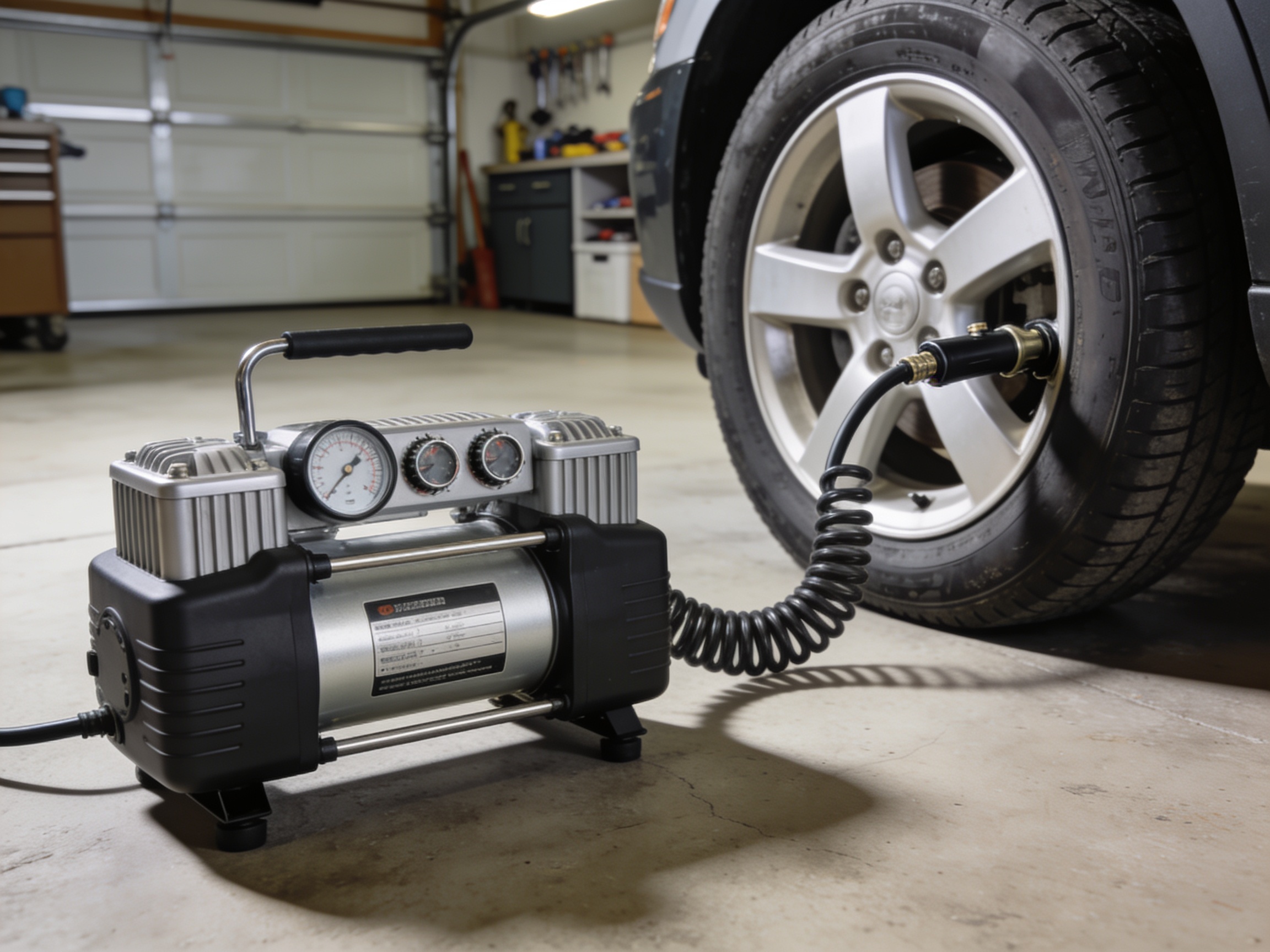
Light DIY jobs such as inflating tyres, blowing down benches and firing occasional nailers can often be handled by a compressor delivering around 2 to 5 CFM. For this sort of use, a small portable unit with a modest tank is usually enough.
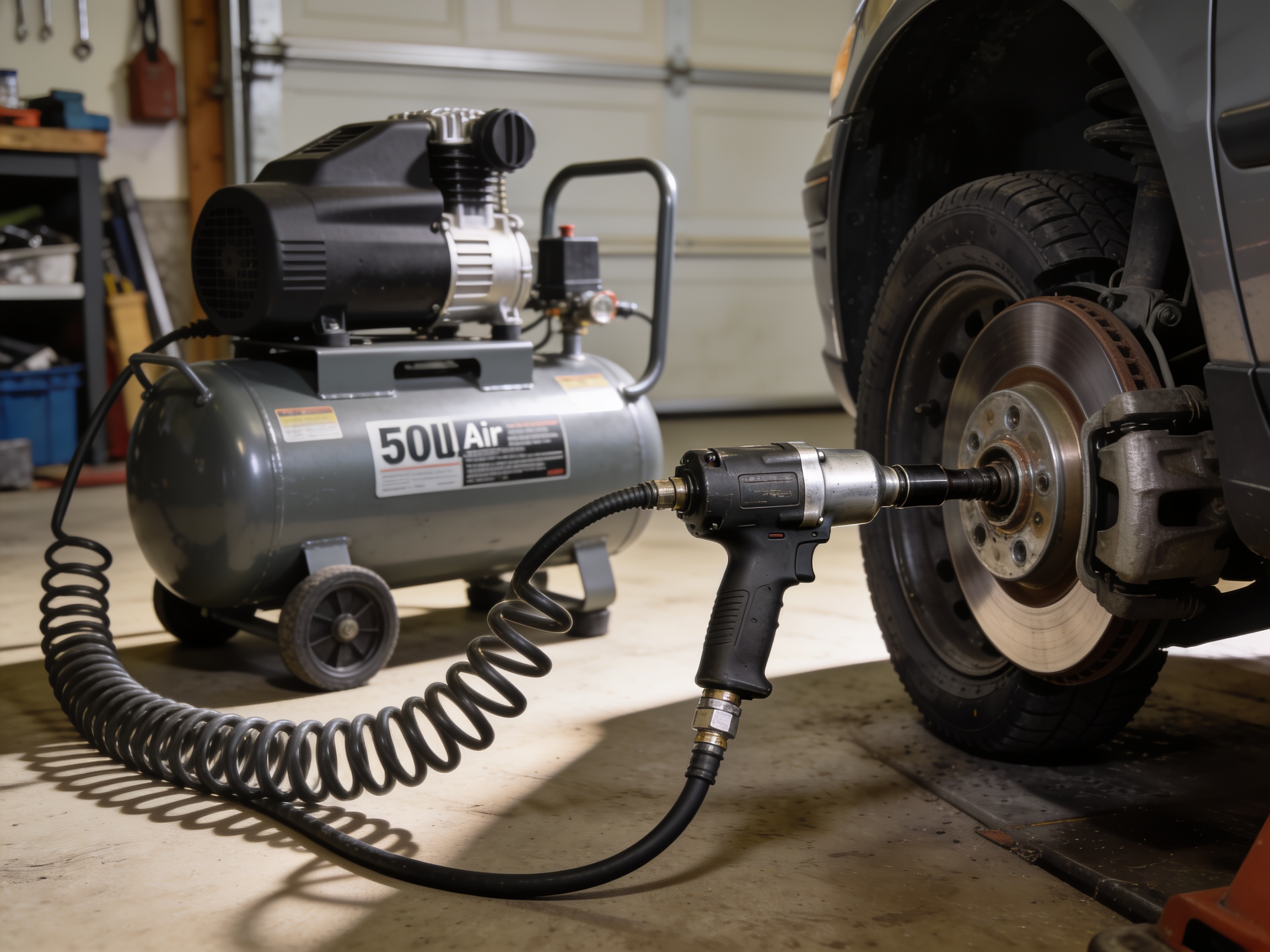
For impact wrenches, staplers, small spray guns and general garage work, you are more likely to need something in the 5 to 8 CFM range. This gives better all-round capability without stepping up to a bulky workshop machine.
If you want to run orbital sanders, grinders, larger spray guns or use tools for longer stretches, look higher. Many of these jobs need 10 CFM or more, and some need significantly beyond that for comfortable continuous use.
PSI, CFM and tank size explained
PSI is straightforward. Most air tools operate somewhere around 90 PSI, although some applications vary. The key point is that the compressor must meet the required pressure for the tool. More PSI is not automatically better if the tool does not need it.
CFM is usually the deciding factor. This tells you how much usable air the compressor can keep delivering. If the tool consumes air faster than the compressor produces it, pressure drops, performance fades and work slows down.
Tank size is the reserve. A bigger tank helps with short periods of high demand and means the motor does not switch on and off as often. That can make the setup feel stronger in practice, but only if the compressor pump can replenish the tank fast enough.
For occasional use, a small tank can be perfectly practical. For repeated cycles, a medium tank often feels more stable. For workshop use with longer running tools, a larger tank starts to make real sense.
What size air compressor for home and DIY use?
For home users, a compact compressor is often the right fit. If your jobs are tyre inflation, cleaning down equipment, occasional nailing or light hobby work, you do not need to overbuy. A portable unit with enough pressure for common air tools and enough airflow for intermittent use will cover most weekend jobs.
The trade-off is recovery time. Small compressors are convenient and easy to store, but they are not designed to support long, uninterrupted airflow. That is fine for punchy, stop-start tasks. It becomes frustrating when you move into spraying panels or using air sanders.
If you are a serious DIY buyer planning regular renovation work, it is worth stepping up from the entry-level end. A slightly larger receiver and better airflow rating can make a big difference to usability.
What size air compressor for a garage?
Garage use tends to sit in the middle ground. Many buyers want one machine that can inflate tyres, power an impact wrench, blow out filters and handle light spraying. In that case, a mid-sized compressor is often the most sensible choice.
You want enough CFM to support common automotive tools without waiting constantly for pressure to rebuild. You also want a tank large enough to smooth out demand during repeated use. Portability still matters if the compressor needs to be moved around the garage or taken to different jobs.
If your garage work is occasional maintenance, keep it practical. If you are doing regular vehicle prep, painting or restoration, size up sooner rather than later. Air-hungry tasks expose the limits of smaller machines very quickly.
What size air compressor for spray painting?
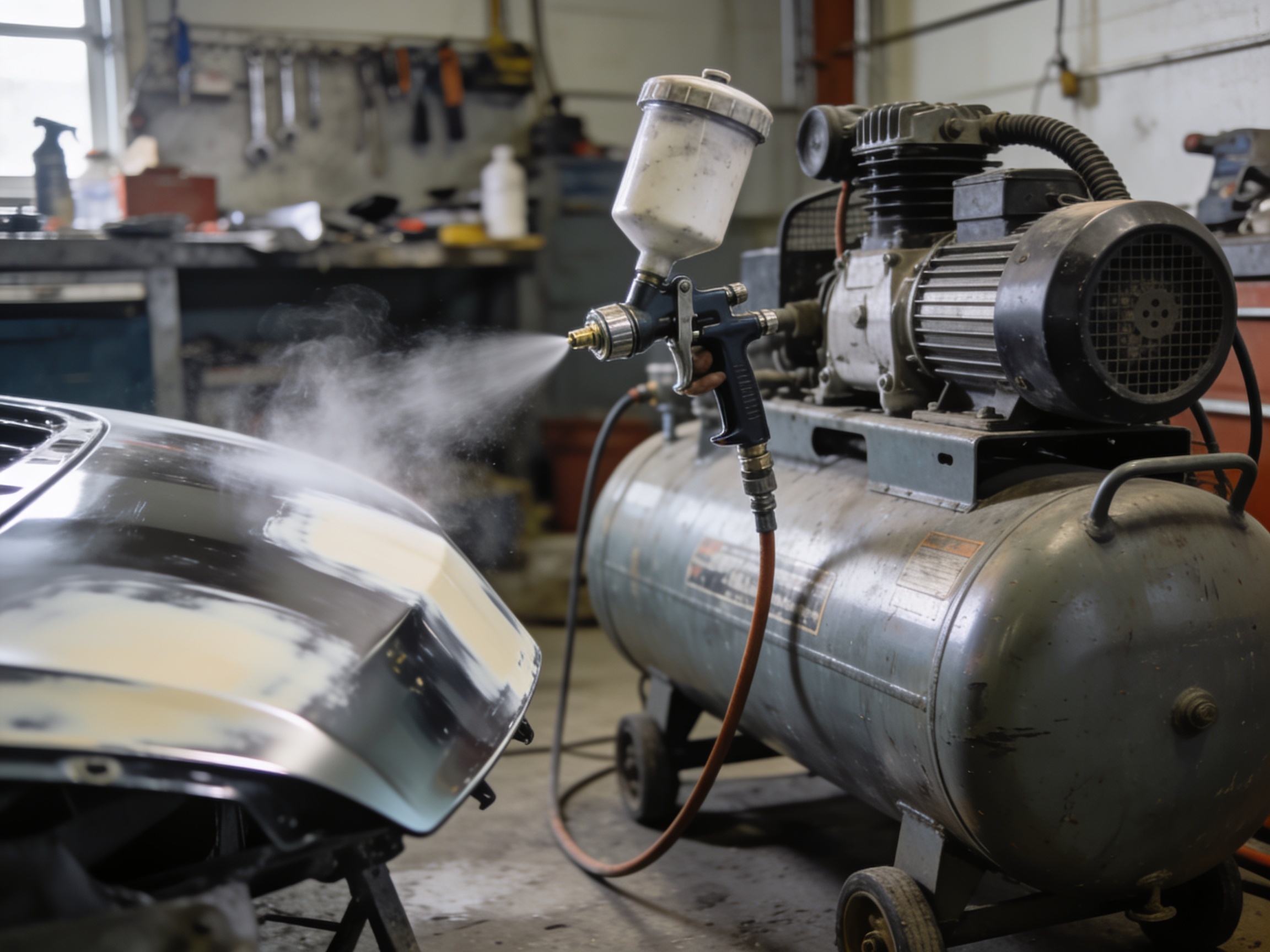
Spray painting is where many buying decisions go wrong. People see the maximum PSI, assume the compressor is powerful enough, and then end up with uneven spray performance because the airflow cannot keep up.
A small touch-up gun may work with a modest compressor. Full-size HVLP spray guns generally need more consistent CFM delivery. The exact figure depends on the gun, but this is one application where checking the manufacturer’s requirement is essential.
You also need to think beyond raw size. Moisture control matters with spraying, so filtration and air treatment become part of the setup. A larger, more capable compressor is helpful, but clean, steady air is just as important as volume.
What size air compressor for air tools in a workshop?
In a workshop, compressor sizing should be based on the most demanding tool you expect to run, plus a margin for real working conditions. If you run one tool at a time and most jobs are intermittent, a mid-range machine may still be enough.
If you expect to use sanders, grinders or multiple tools across the day, you are into heavier-duty territory. At that point, a larger tank and stronger airflow are not luxuries. They are what keeps the workflow moving.
This is also where build quality matters more. A compressor that sees regular workshop use needs dependable performance, sensible duty cycle and components suited to repeated operation. For trade users, downtime costs more than buying the right machine in the first place.
Common mistakes when choosing compressor size
The most common mistake is buying on tank size alone. A large tank looks reassuring, but it does not tell you how fast the unit can actually produce air.
Another mistake is using peak figures instead of delivered figures. Always pay attention to the air the compressor can deliver in normal operation, not just headline numbers used for marketing.
Noise and power supply are easy to overlook as well. A bigger compressor may perform better, but it can be louder and less convenient in a domestic setting. Some heavier units also need more from your electrical supply than a simple plug-and-go machine.
Finally, do not size a compressor right to the limit. If your tool needs 6 CFM, buying a 6 CFM compressor leaves no breathing room. Real-world use is rarely as tidy as a spec sheet.
A practical way to choose the right size
If you only need air for inflation, cleaning and occasional nailers, go compact and portable. If you want a more capable all-rounder for a garage or regular DIY use, choose a mid-sized model with stronger airflow and enough tank capacity to avoid constant cycling. If you are spraying, sanding or running demanding tools for longer periods, prioritise CFM first and choose a tank size that supports steady use.
For buyers comparing options, confidence comes from matching the compressor to the task rather than shopping by price alone. A dependable machine should feel ready for the work you actually do, not just good enough on paper. That is the difference between a tool you use with confidence and one that slows every job down.
Choose for the hardest task you realistically expect to do, leave yourself some headroom, and your compressor will stay useful long after the first project is finished.
CFM guide by tool – the numbers at a glance
If you know the tool, this is the fastest way to size the compressor. As a rule of thumb, aim for at least 25-50% more CFM than the figure below to give the pump room to recover.
| Tool or task | Typical CFM needed | Suggested tank size |
|---|---|---|
| Inflating tyres or sports balls | 0-2 CFM | 6-24 litres |
| Brad or finish nail guns | 1.2 CFM minimum | 6-24 litres |
| Framing nailers | 2.4 CFM minimum | 24 litres+ |
| Impact wrenches / air ratchets | 3.5-5.0 CFM | 50 litres+ |
| Orbital sanders and die grinders | 4-6 CFM | 50 litres+ |
| Spray painting or sandblasting | 5.0-10.0+ CFM | 100 litres+ |
Most standard air tools are designed around roughly 90 PSI, so once CFM and tank size are sorted, check the tool's stated operating pressure matches what the compressor delivers.
If you are building out the rest of a workshop or site kit, our guides to choosing an angle grinder, the best orbital sanders and drill bits for every material cover the tools most likely to end up sharing air supply or bench space with your compressor.