A pile of hedge cuttings can quickly fill a wheelie bin, while bulky branches are awkward to store, transport or compost. This garden shredder buying guide explains what separates a useful garden machine from one that will struggle with the material you actually produce. The right choice comes down to the type and volume of waste, the size of your garden, and how often you want to use the shredded material.
For regular garden maintenance, a shredder reduces branches and clippings into manageable chippings that take up far less space. Those chippings can then be composted, used as mulch or disposed of more efficiently. However, the biggest motor is not automatically the best answer. Cutting system, branch diameter, hopper design and storage all matter just as much.
Start with the waste your garden produces
Before comparing wattage, look at what goes into your garden waste pile. If you mainly trim soft green growth, flower stems and light hedge cuttings, you need a machine that handles leafy material well. If you prune established shrubs, fruit trees or woody hedges, branch-cutting performance should be your priority.
Most domestic shredders list a maximum branch diameter, often between 35mm and 45mm. Treat this as an upper limit rather than a target for every load. A freshly cut, straight branch of the stated diameter is easier to process than dry, knotted or forked timber. If your garden regularly produces thicker hardwood branches, choose a shredder with capacity to spare rather than forcing material through a smaller machine.
A useful rule is to buy for your heaviest routine job, not the occasional oversized branch. Larger pieces can be cut down for logs, taken to a recycling centre or dealt with separately. Oversizing the shredder for one annual clear-out may add unnecessary cost, weight and storage demands.
Garden shredder buying guide: choose the cutting system
The cutting mechanism has the greatest effect on how a shredder works, the material it prefers and the noise it makes. There are two main types for domestic and serious DIY use.
Impact blade shredders
Impact shredders use fast-spinning blades to chop material. They are generally well suited to green, soft and leafy garden waste, including hedge trimmings and young shoots. Their lighter weight and often lower purchase price make them a practical option for smaller gardens and occasional clear-ups.
The trade-off is noise. Impact models can be loud in operation, so considerate use matters in built-up areas. They also tend to work best when fed steadily rather than packed with wet, tangled clippings. Blades will eventually need sharpening or replacing, particularly if grit, stones or soil-contaminated material enters the hopper.
Choose an impact shredder when your main requirement is reducing light pruning waste quickly and you have limited storage space. It is a good fit for gardeners who cut back little and often through the growing season.
Quiet roller shredders
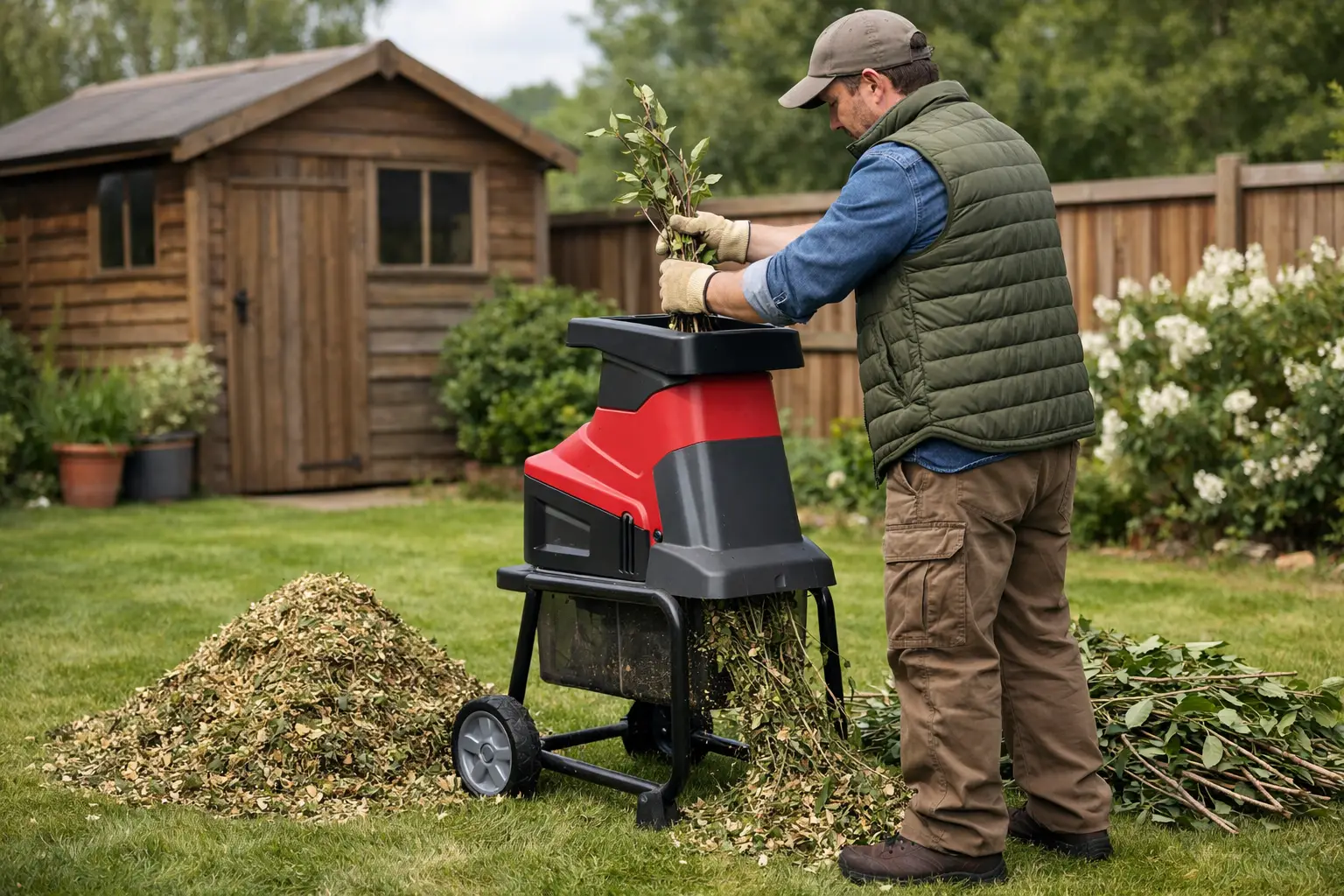
Roller shredders use a slow-turning toothed drum or crushing mechanism to pull in and compress branches against a plate. They are commonly quieter than blade models and particularly effective on woody pruning. The material is crushed rather than finely sliced, creating coarse chippings that break down well in a compost heap or make useful paths and mulch.
These machines are often heavier, but that weight can be worthwhile for regular users with mature hedges, shrubs and trees. Many include a reverse function, which is valuable when a crooked branch jams. Some also offer adjustment of the cutting plate, allowing you to maintain clean processing as the mechanism wears.
Roller shredders are less keen on loose, wet leaves and fine green material, which may pass through without being properly drawn in. Feed leafy cuttings alongside firmer branches where possible, or compost them separately. For a garden dominated by woody material, though, a quiet roller shredder is usually the more capable long-term choice.
Match power and capacity to the job
For corded electric shredders, motor power is commonly stated in watts. A higher figure can support demanding work, but it does not replace a suitable cutting system. A well-designed roller machine with a practical branch capacity will usually outperform a high-wattage blade shredder on dense woody prunings.
Electric models suit most domestic gardens because they provide consistent power without fuel, charging or engine servicing. Check that your extension lead is rated for outdoor use, fully unwound during operation and long enough to keep connections away from the work area. Avoid using a domestic shredder in heavy rain or on saturated ground.
Cordless shredders offer freedom from cables and can be useful where mains power is inconvenient. They are best considered by buyers already invested in a compatible battery platform, provided the available battery capacity meets the workload. Shredding is demanding, so runtime can be shorter than expected when processing thicker timber. For a large pruning session, a corded machine remains the simpler choice for uninterrupted work.
Petrol shredders are designed for more substantial workloads and are generally better suited to grounds maintenance, larger properties and professional use. They have the output and mobility for heavier material, but they are louder, require more maintenance and must be used outdoors with appropriate fuel handling. For most household gardens, an electric shredder offers better value and easier ownership.
Do not overlook hopper design and collection
A wide, stable hopper makes feeding branches safer and less frustrating. Look for a design that keeps hands well away from the cutting area and provides a supplied push tool for shorter pieces. Self-feeding rollers reduce effort with straight branches, while a broad top opening helps when handling bushy material.
Collection boxes are convenient because they keep chippings contained and make it easier to move them to the compost area. Their capacity varies, so think about your garden layout. A large box means fewer stops during a big hedge-cutting job, but it also becomes heavier when full. Machines without a box can discharge directly onto a tarp or into a garden trug, which is perfectly practical if you are working close to the compost heap.
Wheels and a proper handle are worth having, especially on heavier roller units. A shredder may only travel from shed to garden a few times a year, but dragging an awkward machine across gravel or lawn soon becomes tiresome.
Safety features that are worth paying for
Garden shredders are powerful machines, and safe design should be part of the buying decision rather than an afterthought. Overload protection helps prevent motor damage if the machine is pushed too hard. A restart protection feature is also useful, ensuring the shredder does not start unexpectedly after a power interruption.
A reverse setting can save significant time when branches bind in a roller mechanism. A covered switch, secure hopper and stable base all contribute to safer everyday operation. Wear safety glasses, sturdy gloves and hearing protection, particularly with impact shredders. Keep children, pets and bystanders away from the work area, and never reach into the hopper or discharge chute.
Inspect the material before feeding it through. Remove wire, plant ties, stones and soil-heavy roots, as these can damage the cutting system. Feed branches butt-end first where the manufacturer recommends it, and allow the machine to clear before adding more material.
Think about storage, maintenance and realistic use
A shredder that is difficult to move or store is less likely to be used. Measure the available shed or garage space, including the height needed for the hopper. Compact impact models suit restricted storage, while folding hoppers can make a larger machine more manageable between jobs.
Maintenance requirements differ by design. Blade shredders need periodic blade checks, sharpening or replacement. Roller models need the cutting plate adjusted when they stop producing a clean crush, and both types benefit from cleaning after use. Brush away trapped debris only when the machine is isolated from power, then store it dry.
It also pays to be realistic about composting. Fresh green clippings are nitrogen-rich, while dry woody chippings are carbon-rich. Mixing both in sensible amounts helps create a healthier compost heap. Do not apply thick layers of fresh woodchip directly around delicate plants, as it can temporarily draw nitrogen from the soil while decomposing. Allow it to age first, or use it on paths and around established shrubs.
A good garden shredder should make seasonal maintenance quicker, not introduce another difficult task. Choose a blade model for lighter green waste, a roller machine for frequent woody pruning, and enough branch capacity for the work you do most. With the right machine, the pile beside the hedge becomes useful material for the garden rather than another job waiting for collection day.