An angle grinder that feels right in the hand but struggles in the cut is a false economy. The same goes for buying the most powerful model on the shelf when most of your work is light trimming, cleaning welds or occasional masonry cuts. If you are working out how to choose an angle grinder – or how to select angle grinders more broadly for a mixed workload – the best starting point is not the brand badge or the price tag. It is the job.
The right grinder depends on what you cut, how often you use it, and how much control you need. For trade users, that usually means balancing power, durability and battery platform. For serious DIY users, it often comes down to choosing a machine that is capable without being oversized, heavy or unnecessarily expensive.
How to choose an angle grinder for the work you do
Angle grinders are used for far more than aggressive metal cutting. They can grind welds flush, remove rust, chase mortar, trim bolts, cut paving, clean surfaces and polish with the right accessory. That is why one of the biggest buying mistakes is choosing a grinder first and only then thinking about discs and applications.
If your work is mainly metal fabrication, steel cutting and site use, you will usually want a grinder with enough torque to maintain speed under load. If you are tidying welds, deburring and doing lighter workshop jobs, control and comfort may matter more than outright power. For brick, block, tile or paving, dust management and guard design start to matter just as much as motor output.
This is also where frequency of use makes a difference. A grinder used every day on site needs to earn its keep through durability, switch quality, vibration control and proven performance. A grinder used for occasional home projects can still be good quality, but you may not need the same heavy-duty specification.
Choose the right disc size first
Disc size has a major effect on what the grinder can actually do. In most cases, buyers are deciding between 115mm, 125mm and 230mm models.
A 115mm grinder, such as the compact Makita GA4550/2 below, is lighter to handle and well suited to tighter spaces or lighter-duty work. It is a practical option for cleaning metal, trimming smaller sections and general-purpose DIY use. The trade-off is cutting depth. If you regularly cut thicker material, you may outgrow it quickly.
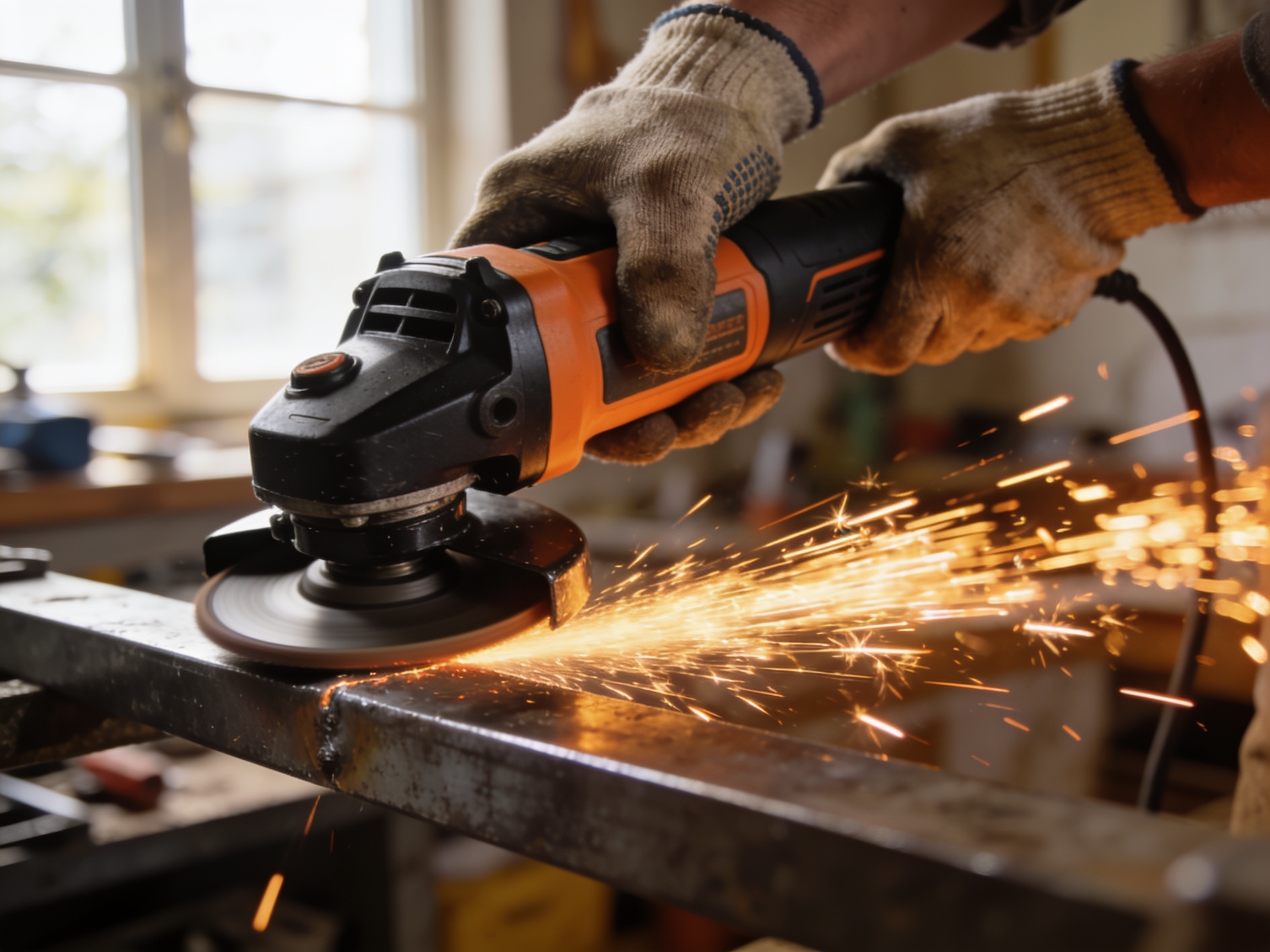
A 125mm grinder is often the most versatile choice. It gives you a little more cutting capacity than 115mm without moving into the bulk of a large grinder. For many tradespeople and committed DIY users, this is the sweet spot for general fabrication, site work and renovation jobs.
A 230mm grinder is built for heavier work such as cutting slabs, steel sections, masonry and larger materials. It is more powerful and offers much deeper cuts, but it is also heavier and less forgiving in confined spaces. For overhead work or long periods of use, that extra size can become tiring.
If you only want one machine, a 125mm model is often the safest all-round choice. If you know your work is mainly heavy cutting, a 230mm machine makes more sense.
Corded or cordless
When deciding how to choose an angle grinder, power source is one of the biggest practical questions.
Corded grinders still make a strong case for demanding applications. They provide continuous power, are ideal for workshop use and remove any concern about runtime. If you are cutting for long periods, using larger discs or working from a bench, corded can be the more efficient choice.
Cordless grinders offer convenience, mobility and speed on site. For installers, fabricators, maintenance work and jobs away from a mains supply, they are often the better fit. Modern cordless models from recognised professional brands deliver serious performance, but battery choice matters. A grinder is a high-drain tool, so the difference between a compact battery and a high-output pack is noticeable.
If you already use a cordless platform for drills, saws or impact drivers – covered in our guide to choosing cordless nail guns if you are building out a wider battery ecosystem – battery compatibility is often a smart way to keep costs under control. Just make sure the grinder you choose is suited to the level of work you expect from it.
Types of angle grinder discs
A grinder is only as useful as the disc fitted to it, and matching the right disc to the job is one of the most overlooked parts of buying an angle grinder.
Cutting discs are thin, reinforced wheels designed to slice through metal, tile or masonry in a single pass. Grinding discs are thicker and designed for stock removal, smoothing welds and shaping metal edges rather than cutting through. Flap discs sit between the two – made from overlapping abrasive flaps, they give a more controlled, gradual finish that suits blending welds and cleaning up surfaces without gouging them.
Diamond blades are the standard choice for tile, stone, concrete and masonry, and come in different bonds depending on whether you are cutting hard or soft material. Wire wheel and wire cup attachments strip paint, rust and corrosion quickly, while polishing pads and buffing wheels handle the finishing stages on metal and stone surfaces.
Before buying discs, always check the maximum disc diameter and the no-load speed rating printed on both the grinder and the disc – fitting a disc rated below the grinder's speed is a genuine safety risk, not just a compatibility inconvenience.
Motor power, speed and control
It is easy to focus on wattage or voltage alone, but performance is more than one headline number.
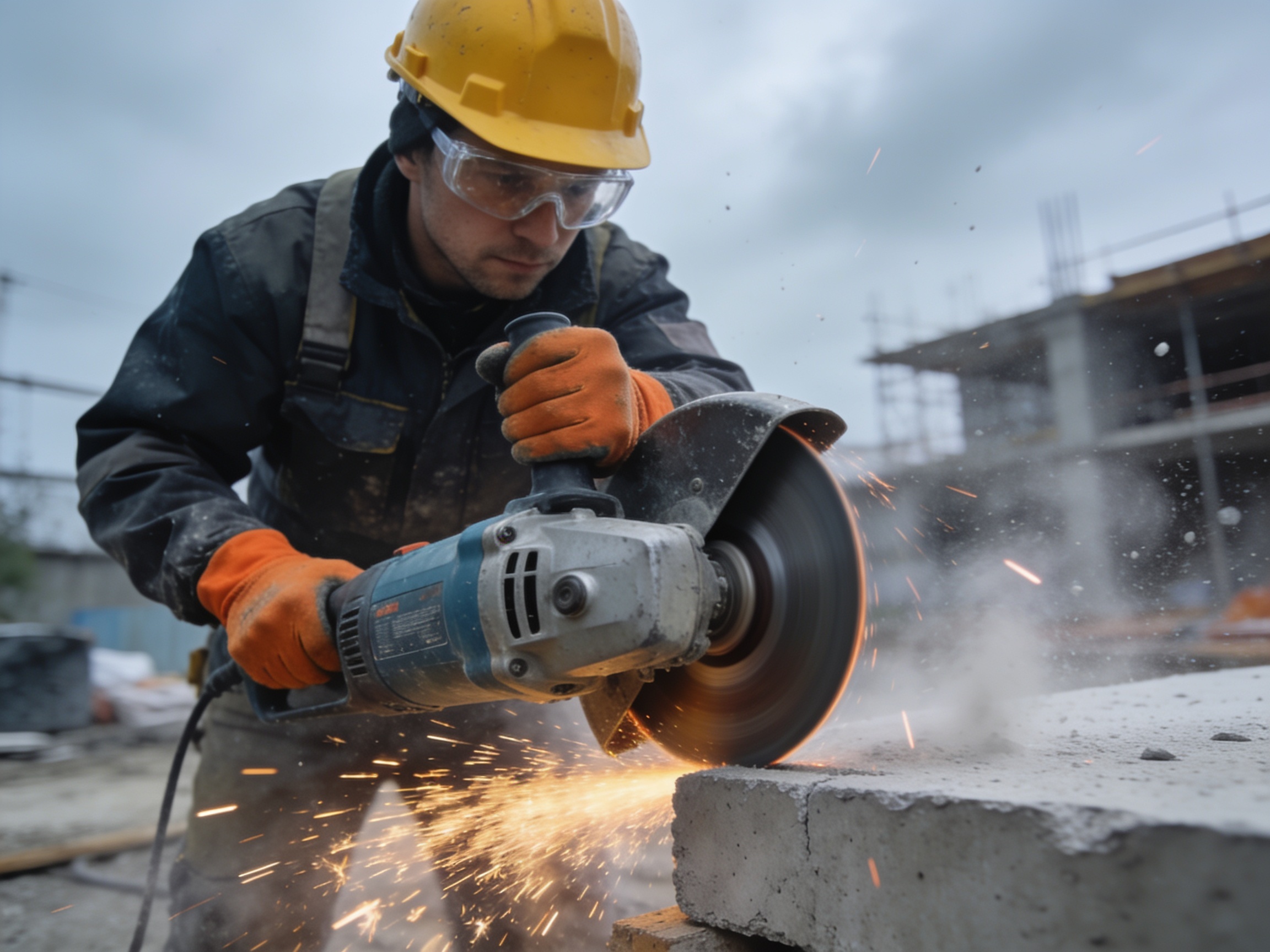
For corded grinders, higher wattage usually means better performance in tougher materials and improved resistance to bogging down. An angle grinder in the 500-900W range comfortably covers occasional household use, 700-1200W suits regular small-scale trade tasks, and 2000W-plus models such as the DeWalt DWE492KL are built for demanding, high-volume cutting.
For cordless models, brushless motors are worth serious consideration because they tend to offer better efficiency, lower maintenance and stronger runtime than older brushed designs. A brushless motor has no carbon brushes to wear down, which means less heat, less energy wasted as friction and a longer working life under repeated heavy use.
No-load speed also matters, although it needs context. A high-speed grinder is useful for cutting and stock removal, but control is just as important as speed. Some applications benefit from variable speed, especially where surface finishing, polishing or material sensitivity come into play. If you only need a grinder for cutting and grinding steel or masonry, fixed speed may be perfectly adequate. If your work is more varied, variable speed can make the tool more flexible.
Soft start is another feature worth having. It reduces the initial jolt when you pull the trigger, giving you better control and less strain on the motor. That tends to matter more on larger or more powerful grinders.
Comfort matters more than many buyers expect
A grinder may only be in your hand for short bursts, but poor ergonomics become obvious very quickly. Weight, grip shape, balance and handle position all affect control and fatigue.
For regular use, look for a model with a comfortable body diameter, a well-positioned side handle and a switch design that suits the way you work. Some users prefer a paddle switch for extra control and safety. Others prefer a slide switch for convenience in longer cuts or grinding passes. Neither is universally better. It depends on your application and your own handling preference.
Anti-vibration features are also worth paying attention to, especially for trade users. They improve comfort over a working day and can make the tool feel more precise in use.
Safety features worth paying for
Angle grinders are highly capable tools, but they demand respect. Better safety features are not just box-ticking extras. They can make a real difference to confidence and control.
Look for features such as electronic brake systems, anti-kickback protection, restart protection and tool-free guard adjustment. A brake helps stop the disc quickly after switch-off. Anti-kickback protection can cut power if the disc binds suddenly. Restart protection prevents the tool starting unexpectedly after a power interruption.
Tool-free guard adjustment is especially useful if you regularly change position between cutting and grinding. It saves time and encourages correct guard placement rather than working around it.
No matter how good the grinder is, it still needs the correct disc, a properly fitted guard and suitable PPE. Eye protection, gloves, hearing protection and the right clothing are part of the job.
Match the grinder to the discs and accessories
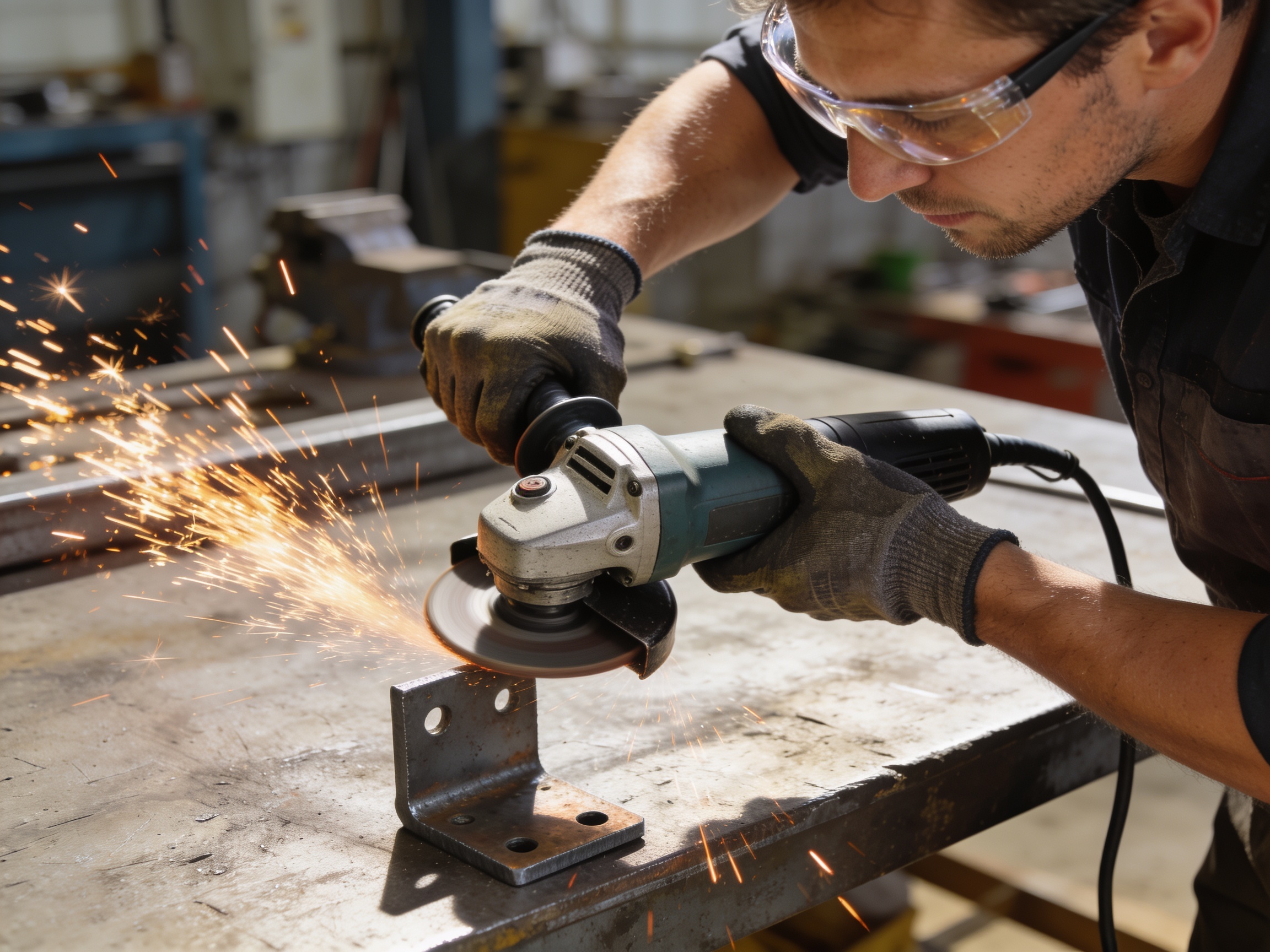
One machine can do many jobs, but only if the accessories match the task. Cutting discs, grinding discs, flap discs, diamond blades, wire wheels and polishing pads all place different demands on the tool.
That means you should check spindle thread, disc compatibility and guard suitability before buying. It also helps to think about availability of replacement accessories. A grinder that fits easily into your existing setup is usually the smarter purchase.
For masonry and tile, a suitable diamond blade can be just as important as the grinder itself. For metal finishing, flap discs often give a cleaner, more controlled result than a standard grinding disc. If you expect to switch between tasks regularly, ease of disc change becomes more important.
Brand, build quality and value
Recognised brands earn their reputation for a reason. Consistency, service support, accessory availability and long-term reliability all matter with a tool that sees tough use.
That does not always mean buying the most expensive model in the range. It means choosing a grinder with the right specification for the workload. A mid-range professional model – the Bosch Professional GWS 7-125 is a good example of this bracket – can be better value than an entry-level option that wears quickly under trade use. Equally, a serious DIY buyer may be better served by a dependable compact model such as the Makita 115mm above, rather than overbuying a heavy machine they rarely use properly.
At UK Tool Store, that is why the strongest choices tend to come from trusted brands like Makita, Bosch and DeWalt, with proven performance across both corded and cordless ranges. You want a tool that is ready for the project in front of you and still reliable for the next one. If you are building out a wider kit, our tool chest buying guide covers how to keep everything organised and protected between jobs.
A practical way to narrow it down
If you are still comparing options, simplify the decision. Start with the material you work on most often, then choose the disc size that gives you the right cutting depth and handling. After that, decide whether corded or cordless fits your working environment better. Finally, compare comfort, safety features and battery compatibility if you are already on a cordless platform.
That approach usually gets you to the right answer faster than chasing the highest spec on paper. A well-chosen grinder should feel like a tool you can trust, not one you need to work around.
The best angle grinder is rarely the biggest or the cheapest. It is the one that matches your workload, handles confidently and gives you reliable performance every time you pick it up.
[…] the tools that will actually live in your new chest, our guides to drill bits for every material, choosing an angle grinder and electricians' tools cover the kit most buyers are looking to […]