
A cordless nail gun can save a serious amount of time on site or in the workshop, but only if you buy the right type for the work you actually do. If you are wondering how to choose a cordless nailer — or a cordless nail gun, as most UK buyers search for it — the key is not brand first. It is application, nail type, power, size and battery platform. Get those right, and the tool becomes a genuine productivity upgrade rather than an expensive compromise.
Some buyers start by looking at whatever is on offer. That can work if you already know the exact class of nail gun you need, but it often leads to buying too light for structural work or too heavy for second-fix jobs. A better approach is to match the nailer to the material, the fixing and the pace of work.
Cordless nail guns and nailers sit within our wider power tools range if you want to compare specific models once you’ve settled on a type.
How to choose a cordless nail gun for the job
The biggest decision is which category of nail gun fits your work. Cordless nailers are not one-size-fits-all, and the gap between a finishing nailer and a framing nailer is significant.
A brad nailer is usually the right choice for light second-fix work. Think trim, beading, small mouldings, panelling and neat interior jobs where you want minimal marking. These typically use 18 gauge brads, which are thinner and less visible once driven. They hold well for lighter materials, but they are not intended for structural fixing.
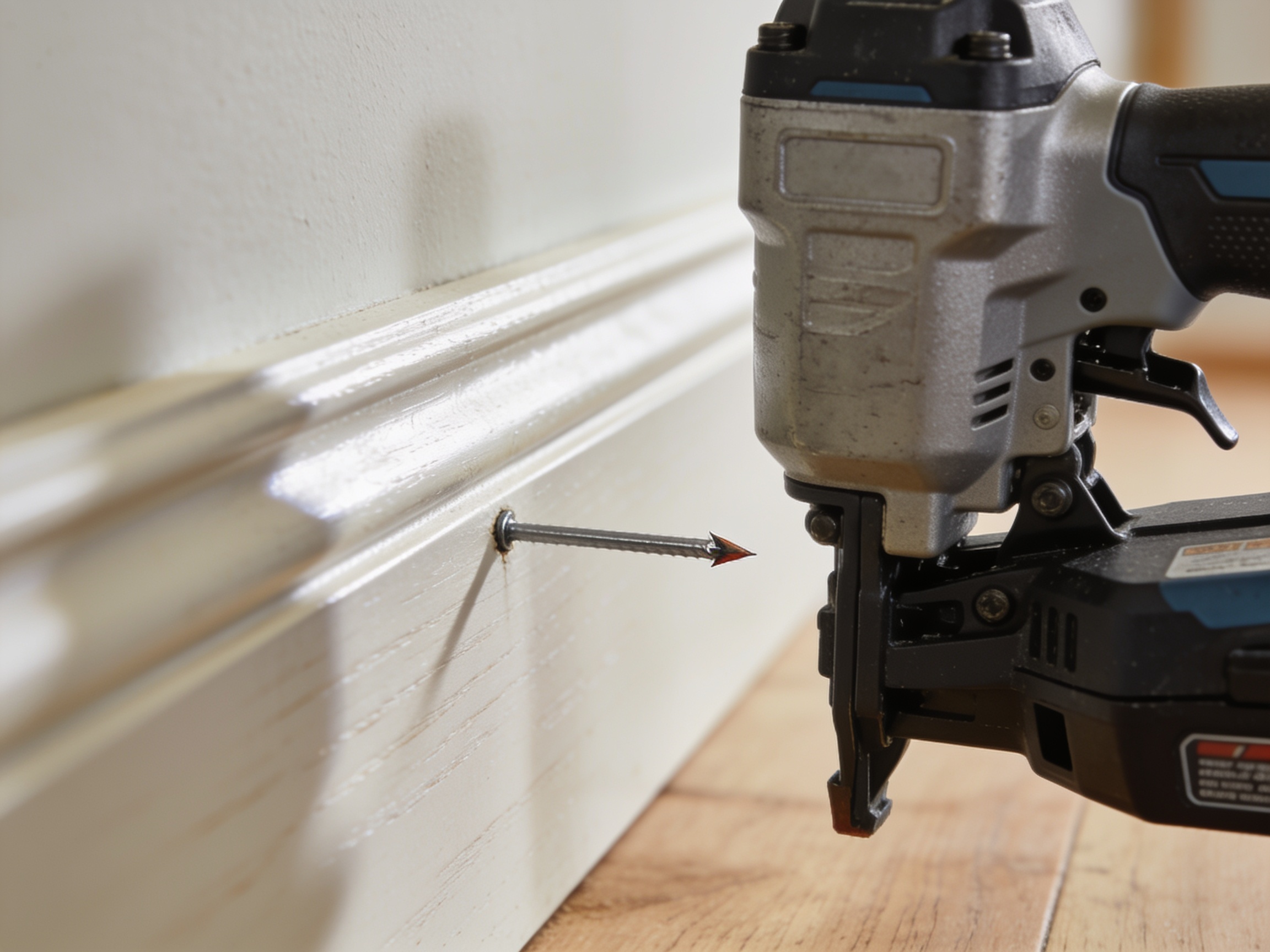
A finish nailer steps up the holding power. These are better for skirting, architrave, door linings, heavier trim and joinery where a stronger fixing is needed without moving to full framing nails. Depending on the model, you may be choosing between 16 gauge and 15 gauge. As a rule, 15 gauge nails are thicker and offer more grip, while 16 gauge tends to suit finer finishing work with a slightly smaller hole.
A framing nail gun is built for heavy-duty fixing. This is the tool for timber framing, stud walls, decking substructures, fencing, roofing timbers and general first-fix construction. It is larger, heavier and more powerful for a reason. If your work is structural, a lighter nailer will not be a shortcut. If you’re framing and cutting timber in the same job, our mitre saw buying guide covers the cutting side of first-fix work.
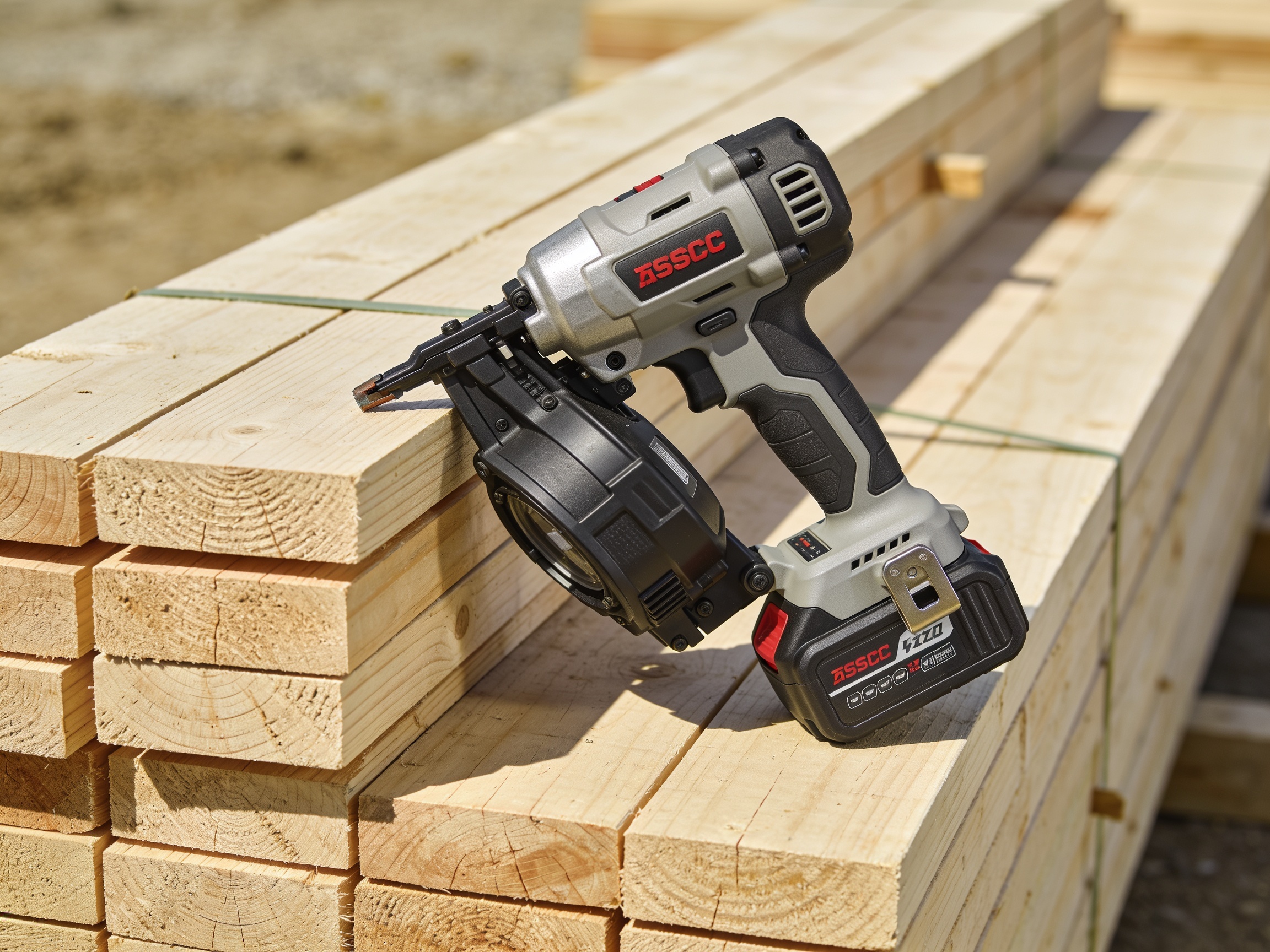
There are also specialist options such as roofing nailers, flooring nailers and staplers. If you only occasionally handle those jobs, a general-purpose nail gun may cover most of your needs. If that work is routine, a dedicated tool usually pays back in speed and consistency.
Gauge, nail length and fixing strength
Once you know the nailer type, look closely at the fastener range. This is where many purchase decisions are won or lost.
Gauge affects the thickness of the nail and, in practical terms, the balance between holding power and finish quality. Lower gauge numbers mean thicker nails. That matters because a thicker fixing generally holds better, but it also leaves a more visible hole and may be less forgiving in delicate trim.
Nail length matters just as much. A cordless nail gun may look suitable at first glance, but if it does not accept the lengths you need, it is the wrong tool. For trim and finishing work, you need enough penetration to hold securely without blowing through thin material. For framing or external timber work, longer nails are often essential.
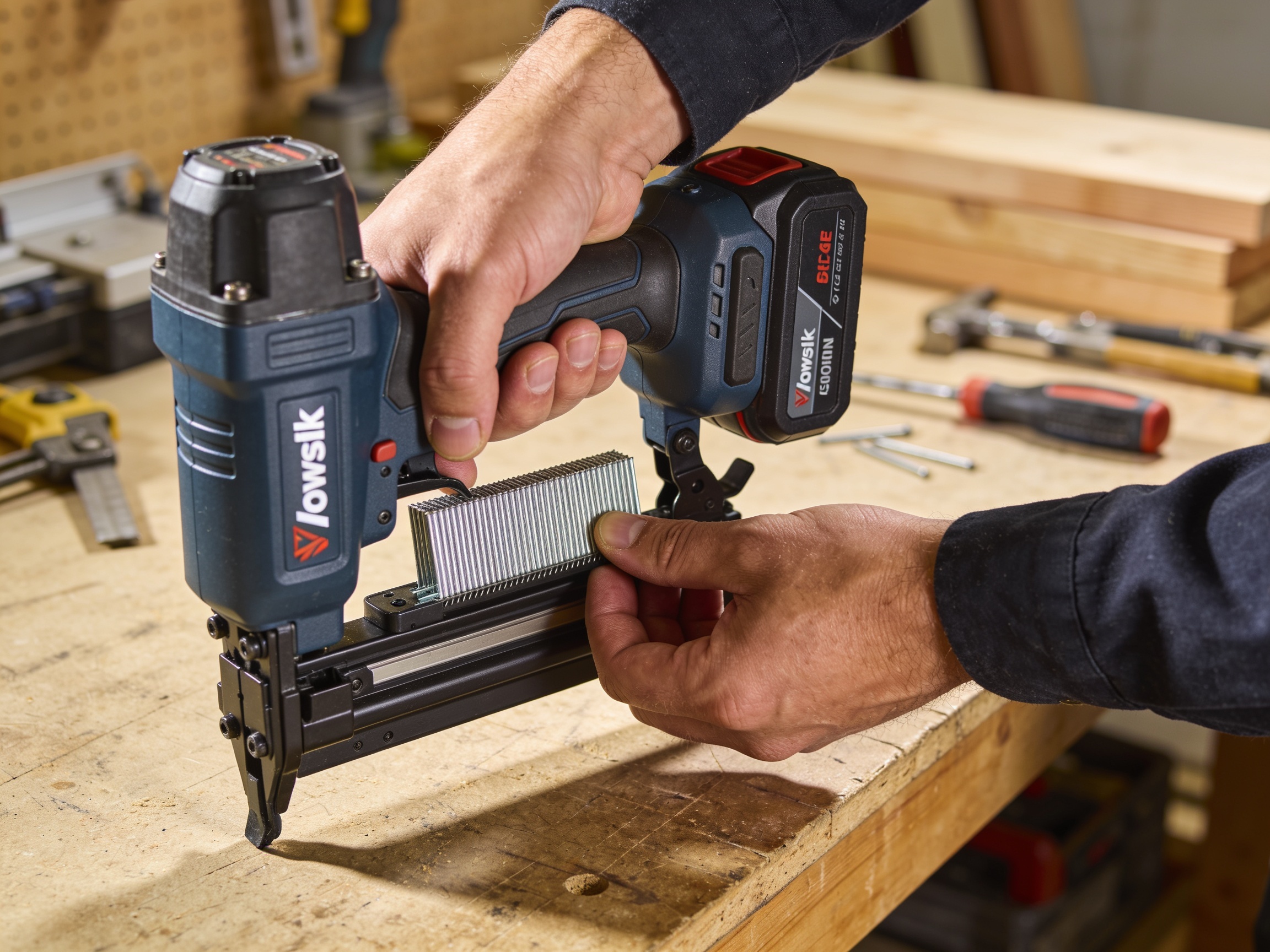
It is also worth checking collation type and angle, especially with framing nailers. Some take clipped head nails, others full round head, and magazine angles vary between models. That affects both nail availability and how the tool handles in tighter spaces.
If you are buying for trade use, it makes sense to think beyond one immediate project. Choose a model that covers the nail sizes you use most often, with enough flexibility for adjacent jobs.
Power source and firing performance
Most modern cordless nail guns are either gas-assisted cordless models or fully battery-powered systems using a flywheel or similar drive mechanism. Both can work well, but they suit different priorities.
Battery-only nailers are popular because they keep things simpler. No gas cells to replace, no extra consumables to carry, and easier day-to-day maintenance. For many trades and serious DIY users, that convenience is a major advantage. If you already run a cordless platform from DeWalt, Makita, Milwaukee or Bosch, staying on the same battery system can make the decision much easier.
Gas-assisted models are still valued by some users for fast firing and strong drive performance, particularly on demanding timber applications. The trade-off is the ongoing cost of gas cells and a slightly more involved ownership routine.
However the tool is powered, pay attention to firing response. Some cordless nail guns have a noticeable delay between trigger pull and nail drive, while better models feel more immediate and controlled. That difference matters far more in daily use than it does on a specification sheet.
Sequential and bump fire modes are also worth checking. Sequential firing gives better control for precise placement. Bump fire can increase speed on repetitive work, but it is not always necessary for every user and should be used with care.
Weight, balance and working position
Cordless convenience comes with one obvious compromise: weight. Without a hose and compressor, mobility improves, but the tool itself is often heavier than a pneumatic equivalent.
That is not automatically a problem. On a framing nailer, weight is expected because the tool is built for demanding material and larger fixings. On overhead work, snagging-free movement can outweigh the extra mass. But on prolonged second-fix jobs, especially trim and detailed interior work, a bulky nail gun can become tiring quickly.
Balance is just as important as total weight. A well-balanced tool feels more predictable in awkward corners, at arm’s length or when working vertically. Features like a comfortable grip, sensible nose design and easy magazine loading all make a difference over the course of a long day.
If you are a DIY buyer using the nail gun for occasional weekend projects, you may accept a bit more weight in return for flexibility and battery compatibility. If you are using it professionally every day, comfort and handling deserve more attention.
Battery platform and runtime
For many buyers, the smartest cordless nail gun is the one that fits the batteries already in the van, workshop or garage. That is not just about cost. It is about convenience, charger space, spare battery availability and reducing downtime.
If you already use a cordless ecosystem heavily, adding a compatible bare unit often makes better commercial sense than starting a separate platform for one tool. This is especially true for trade users who want fewer chargers, fewer cases and simpler replenishment.
Runtime should be judged realistically. Nail guns do not draw power in the same way as grinders or saws, so a compact battery may still deliver strong output across a typical day, depending on the tool and application. The better question is whether the platform gives you reliable battery access when workload increases.
It is also worth checking whether performance changes with battery size. Some tools feel noticeably better with higher-capacity packs, while others remain well matched on smaller batteries.
Build quality, adjustments and everyday usability
A cordless nail gun should save time, not create fiddly delays. Features that look minor in a product description can have a real impact once the tool is in regular use.
Tool-free depth adjustment is one of them. It allows you to adapt quickly between materials without interrupting the job. Dry-fire lockout is another useful feature, helping prevent blank firing when the magazine runs low. Easy jam clearance matters too, especially if you are moving quickly and cannot afford repeated stoppages.
For site work, durability is non-negotiable. A professional-grade nail gun should be able to handle transport, repeated use and less-than-perfect working conditions. Recognised brands tend to justify their reputation here, not only through motor performance but through magazine design, nose durability and overall reliability.
Noise and maintenance also deserve a brief look. No cordless nail gun is silent, but some are more refined in operation than others. Battery-only models usually appeal to buyers who want less routine upkeep, while gas systems ask a bit more from the user.
Price matters, but value matters more
If you are comparing models, the cheapest option is rarely the cheapest to own if it misfires, lacks parts support or does not suit your core work. Equally, the most expensive tool is not automatically the right buy if your usage is occasional and light-duty.
The best value comes from buying to your workload. A serious DIY user fitting skirting, panelling and trim across several renovation projects may be better served by a quality brad or finish nail gun from a proven cordless range than by a heavy framing model that sees little use. A trade carpenter or builder will usually benefit from stepping up to a tougher, faster tool with stronger consumable support and better site durability. If you’re also organising batteries, chargers and nail gun magazines alongside the rest of your kit, our tool chest buying guide is worth a look.
That is where buying from a specialist retailer helps. A broad range across recognised brands makes it easier to compare by application, battery platform and performance rather than guessing from price alone.
A good cordless nail gun earns its place quickly when it matches the work, the fixing and the way you already use your cordless kit. Choose with that in mind, and you will end up with a tool that works harder, wastes less time and gives you confidence on every job.