Planer Blades
Compared on price, power and value, with prices checked daily against Amazon UK. Not sure where to start? Our buying advice is further down the page.
-

2x Planer Blades for Milwaukee 2623-20 M18 HSS – Reversible
£9.99 -
319mm DeWalt DW733 Type 2 Planer Thicknesser Blades 1 Pair Only Fits DW733 Type 2 Machine Made by Xcalibur Tooling
£59.99 -
4 x 82mm Planer Blades 82mm Electric Planer Blades for Bosch, DeWalt, Makita, Ferm, Hitachi, Holz-Her, JCB, Mafell, Peugeot, Ryobi, Skil
£14.99 -
4 x Tungsten Carbide Blades for Bosch PHO & GHO Planers (Same as Bosch 2607000096) Tungsten Carbide, Precision Ground.
£13.95 -
6 Pcs HSS Planer Blades Double Edged Knives 333x12x1.5mm,
£25.28 -
75mm Fit Black & Decker DN750 SR600 BD750 710 Carbide Planer Blades also fit Bosch 0590 1590 Trend PB28, Mafell HU75 TCT 1 Pair by Xcalibur Tooling Durable TCT Planer Knives with Two Cutting Edges
£11.99 -
82mm Carbide Planer Blades For Black and Decker BD710 DN710 DN720 BD711 KW712, Makita, DeWalt, Ryobi, Hitachi, Black & Decker Planers 82mm TCT Knives 1 Pair by Xcalibur Tooling
£12.49 -
82mm German Carbide Planer Blades for DeWalt Makita Metabo Ryobi Elu Planer Blades 82mm Pack of 10 Solid Carbide Made in Germany
£35.99 -
82mm HSS Planer Blades Replacement for DEWALT DCP580 18V Planer N556874 also fit Makita, Black and Decker, Bosch and Elu planers
£11.49 -
82mm Reversible Planer Blades – 10-Pack Double-Edged HSS Replacement for Makita, Bosch, Ryobi & More – High Carbon Steel, Fits Electric Hand Planers, Includes Storage Case
£6.59 -
82mm Reversible Planer Blades 10 Pack, Double Sided Electric Planer Blades
£8.69 -
82mm Reversible Planer Blades Replacement for Black & Decker, Bosch, DeWalt and Elu planers (10 Pcs – High Speed Steel)
£14.99 -
Blades For Bosch PHO 100 Planer
£6.99 -
Blades for Bosch PHO 16-82 Planer
£6.99 -
Blades for Dewalt DCP580N Cordless Planer
£6.99 -
Blades for Mac Allister MSHP900 Planer
£6.99 -
BLSGBUIDING Jointer Planer Blade Sharpener 12" Woodworking Knife Sharpening Jig Aluminum – 1pack
£28.45 -
Bosch Genuine Reversible Planing Blades (2 per Pack) (To Fit: Bosch PHO & GHO Planers – Models noted below) c/w STANLEY KeyTape (image shown) + Cadbury Chocolate Bar
£13.95 -
Bosch Pro Hobelmesser für Handhobel (2 Stück, 35°)
£11.49 -
Box Of 10-82mm HSS REVERSIBLE PLANER BLADES Replaces Makita, Black & Decker, Bosch, DeWalt, Trend and Elu planers QUICK DELIVERY
£14.95




Choosing planer blades for electric planers and thicknessers
A blunt or chipped blade is behind most bad results from electric planers: torn grain, burn marks, ridges and a motor that sounds like it is working far too hard. The good news is that replacement planer blades are cheap compared with the tool itself, and fitting a fresh pair takes a few minutes. The tricky part is getting the right size and type for your machine, because a blade that is 1mm out simply will not seat. This guide covers what to check before you buy, whether you run a handheld planer on site or a planer thicknesser in the workshop.
Handheld planer blades: the 82mm standard
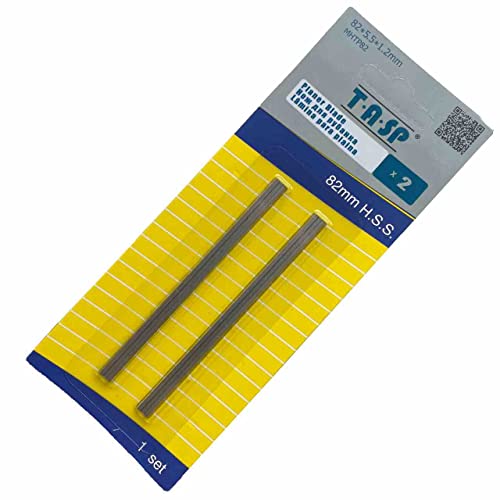
Most handheld electric planers, corded or cordless, take 82mm blades. That covers a huge range of power tools, from 620W DIY models to an 18V XR cordless brushless planer such as the DeWalt DCP580 or Makita 18V LXT machines. Replacement blades for all of these are widely available. Because so many brands share this planer format, you will often see blades listed as fitting Bosch, Makita, DeWalt, Ryobi and Black and Decker at once. That can be true, but the planing width is only one measurement. Always check:
Width (length of the blade): usually the standard size, with some compact 12V and 18V tools using 56mm or 75mm.
Height and thickness: common sizes are 5.5mm x 1.1mm for mini reversible blades, while thicker resharpenable knives can be 2mm or more.
Fixing style: some drums use a slotted or locating groove, others clamp a plain blade. A product with holes will not suit a drum designed for a slot.
If in doubt, match the part number from your tool manual rather than relying on the brand name alone.
Planer thicknesser and jointer knives
Planer thicknessers and benchtop thicknessers use much longer knives, typically 204mm, 260mm, 318mm or 330mm. These are usually sold in pairs and are made to fit specific machines from Scheppach, Record Power, Metabo, Einhell and others. Width, height and thickness all matter here, and the knife has to sit at exactly the right projection in the cutter block, so it pays to buy for the exact model. Spiral and helical cutter heads are different again, using small square carbide inserts that you rotate to a fresh face. The same applies to a thickness planer used in a small workshop: buy for the model, not the brand.
HSS or TCT: which edge to choose
High speed steel (HSS) blades take a very keen edge and can usually be resharpened several times, which suits joiners and workshops planing a lot of softwood. Tungsten carbide tipped (TCT) blades stay sharp far longer, especially in hardwoods, sheet materials and reclaimed timber, but they are usually reversible or disposable rather than resharpenable. For a DIY user with a cordless planer and a few doors to trim each year, a pack of reversible TCT blades is often the least hassle. If you plane a lot of oak or painted timber, TCT will save you swapping blades every job.
Getting the best results from fresh blades
Unplug the planer or remove the battery before touching the drum.
Clean resin and dust out of the drum and blade seat so the blade sits flat.
Always change both blades together so they cut at the same depth, otherwise you get a ribbed finish.
Set a shallow cutting depth on the first pass and check the work with a straightedge.
Use the dust bag or plug into an extractor or dust collector. Dust collectors help a lot on a thicknesser, and chips packed into the chute make a handheld planer clog and can affect rebate depth accuracy.
If the tool itself is due an upgrade, our guide to brushless vs brushed tools explains why a brushless planer tends to run longer on a battery, and our pick of professional woodworking power tools covers the wider kit.
Planer blades FAQs
What are the uses of an electric planer?An electric planer removes thin layers of wood quickly. It is used for trimming doors that stick, levelling joists and studwork, chamfering an edge, cutting a rebate up to the tool’s rebate depth, and cleaning up rough sawn timber. Sharp blades are what make the finish clean.
What is the best battery planer?The best battery planer is usually the one that runs on the 18V battery platform you already own, as the bare body is much cheaper than a kit. DeWalt 18V XR, Makita 18V LXT and other 18V planers all take standard size blades, so spares and compatible products are easy to find.
What are some common problems with thickness planers?Snipe at the ends of a board, a ridged or fluffy finish, and burn marks are the usual complaints. Blunt or unevenly set knives cause most of these, so new knives set at equal height often fix the problem. Feed rollers and a clean bed help too.
How often should I change planer blades?When the tool needs more push, the finish starts to tear, or you can see nicks in the edge. Reversible blades can be flipped once before replacing.
Browse more cutters, discs and bits in our power tool accessories range, including router cutters for shaping and joinery.