Clamps
Compared on price, power and value, with prices checked daily against Amazon UK. Not sure where to start? Our buying advice is further down the page.
-

LDHHYH 4 Pack Plastic Spring Clamps, 8 Inch Nylon Spring Clamps Clips Large Clamps for Woodwork, Heavy Duty Quick Grip Clamp for Photo Studio Backdrop Background Stand Woodwork Artwork
£16.99 -
MAXPOWER 4-Piece Clamp Clamp Range 150 mm Quick Clamp Ratchet Clamp – Maximum Tightening Force 100 kg
£15.98 -
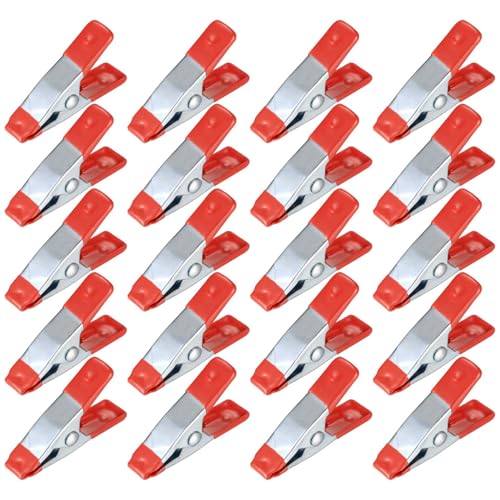
Metal Spring Clamps Clips, Heavy Duty Tipped Grip Holder Rubber Coated, Wood Clamps for Tarpaulin, Camping, Woodworking, Model Making Tool – 20 Pcs/2 Inch (20)
£5.99 -
Nirox Set of 4 Spring Clips, Clamps
Original price was: £10.94.£9.30Current price is: £9.30. -
OSDUE 24 Pcs Nylon Spring Clamp, 2 Inches Heavy Duty Spring Clips
Original price was: £7.99.£6.79Current price is: £6.79. -
Pack of 6 Plastic Spring Grip Clamps 3 Inches Quick Grip Craft Wood Work Clamp
£4.49 -
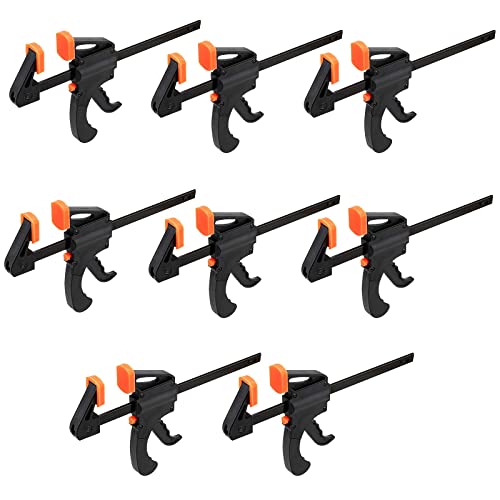
PINGEUI 8 Pack 4 Inch Quick Grip Clamps – Ratchet Bar and Quick-Release Tools for Professional Woodworking, Manual Work, DIY Handmade Craft Projects
£12.99 -
Preciva 90 Degree Positioning Square Clamp Aluminum Alloy Right Angle Clamp
£27.99 -
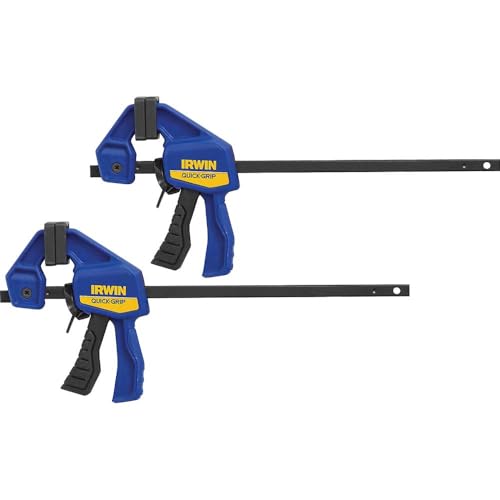
Quick-Grip 5122Qc Twin Pack Bar Clamps 12In, Blue
£22.91 -
Quick-Grip Irwin 53006 Micro Clamp (1 x This pack contains 2 Spring Clamps), Black, 100mm
£8.50 -
Quick-Grip Irwin 59400 Handy Adjustable Clamp with Quick Release Lever,Grey,100mm
£9.71 -
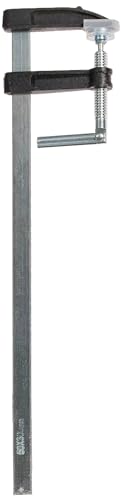
Rolson 14382 50 x 300 mm F Clamp
£5.86 -
Rolson 60341 6 pc 50 mm Spring Clamp Set, Black
£4.46 -
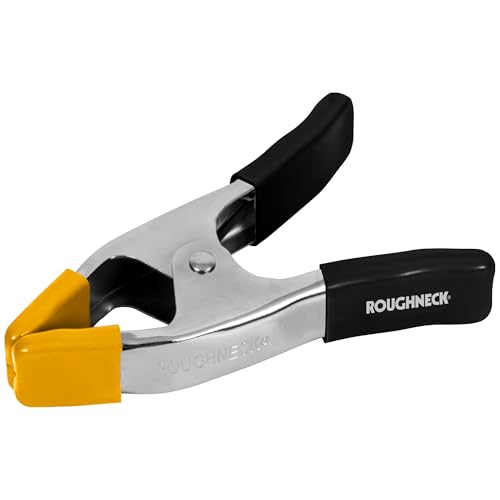
Roughneck Heavy Duty Metal Spring Clamp 50mm/2"
£3.88 -
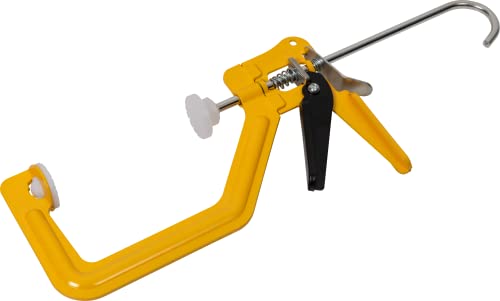
Roughneck ROU38010 Turboclamp One-Handed Speed Clamp 150mm (6in)
£11.14 -
Roughneck ROU38332 Heavy Duty Spring Clamp ,Black,50mm/2"
£3.89 -
SHALL 12-Inch(30.48cm) Steel Bar Clamps Set, 4-Pack Medium-Duty Quick-Release F Clamps, 600 Lbs Load Limit for Woodworking, Metal Working, DIY and Crafts
£26.99 -
Silverline 282369 F-Clamp Heavy Duty (Deep Capacity) 200 x 100 mm
Original price was: £10.70.£10.36Current price is: £10.36. -
Silverline 590588 F-Clamp Set 2pce 150 x 50 mm
Original price was: £9.89.£9.58Current price is: £9.58. -
Silverline Mini Clamps – 2 Piece, 150mm Quick-Release Spring Clamps for Woodworking & Crafts (250115)
£9.99










Choosing the right clamps for your workshop
You can never really own too many cramps, as joiners in the UK often call them. They’re the extra pair of hands that holds a job still while you glue, drill, screw or saw, and the right type makes the difference between a tight, square joint and one that slips the moment you let go. Here is a simple, step by step way to work out what you actually need.
Types of clamps and what they’re good at
G-cramps are the classic cast iron or forged steel frame with a screw thread. They give strong, steady pressure for metalwork, welding prep and holding a block or batten firmly in place on a bench.
F-cramps and sash cramps have a sliding arm on a steel rail, so you get a longer reach than a G-cramp. Sash cramps are the go-to for building doors, frames and table tops in oak, walnut or pine.
One-handed trigger cramps let you hold the work with one hand and tighten with the other. They’re ideal for quick dry fits and light tasks, though they do not give the same pressure as a screw thread.
Sprung cramps are cheap, light and handy for holding thin objects, dust sheets and veneers while glue sets.
Specialist types include corner cramps for picture frames and carcases, band cramps for odd shapes, toggle cramps for jigs, locking cramps that work like a self-grip wrench, and guide rail cramps for track saws. Pipe cramps use a length of standard pipe, so you can build long cramps for very little money.
Which type of clamp do I need?
Start with the jobs you do most. For general DIY and carpentry, a pair of 300mm F-cramps and a pair of smaller trigger cramps will cover most tasks. Add a couple of G-cramps if you do any metal or need to fix a straight edge to a sheet for sawing. Furniture makers should add sash or pipe cramps long enough to span the widest panel they glue up, because a wide top needs even pressure along its length.
What to check before you buy
Capacity and throat depth tell you how wide an object it can open to and how far in from the edge it can reach.
Clamping force is often listed in kilograms or newtons. More is not always better, as too much pressure starves a glued joint and can crush softwood.
Jaw pads in rubber or soft plastic protect the work from marks. If yours are bare steel, slip a scrap of wooden board between the jaw and the job.
Frame and handle matter. A stiff steel bar resists bending under load, and a comfortable handle makes a long glue-up far less of a chore.
Getting the best from them
Dry fit everything first so you know the cramps are set to roughly the right opening. Alternate them above and below a panel to keep it flat, check it is square by measuring the diagonals, and wipe off squeeze-out before it hardens. Keep the threads clean and lightly oiled and they will last for years. Our hand tools buying guide has more on building up a sensible kit, and our chisels pair well with cramps for cleaning up joints once the glue has set.
Clamps FAQs
What are clamps used for? Any time two or more pieces need holding together or a workpiece needs holding still: gluing, sawing, drilling, welding, routing and fixing jigs or guides to a bench.
Are clamps useful for more than just building? Very much so. They hold tarps and dust sheets, steady items for painting, secure work to a trestle for a quick cut, and help with car and bike repairs. A variety of sizes will earn its place in any shed or van.
How many do I need? At least two of any size you use, as most jobs need even pressure from both ends. Browse the rest of our hand tools range for vices and workholding to go with them.