Tool Cabinets
Compared on price, power and value, with prices checked daily against Amazon UK. Not sure where to start? Our buying advice is further down the page.
-
Sightlife Metal Garage Storage Cabinet with 2 Doors Lock Steel Tool Cabinets 4 Adjustable Shelves Lockable File Cabinet Tall Locker Organizer Steel Garage Cabinets Black
Original price was: £169.99.£137.27Current price is: £137.27. -

SUPEER Metal Storage Cabinet with 2 Door and 4 Adjustable Shelves,Black
£169.99 -
SUPEER Metal Storage Cabinet with 2 Doors and 1 Adjustable Shelves
£139.99 -
TANGZON Lockable Tool Cabinet, Rolling Tool Chest Combo with Wheels, Drawers, Hooks & Side Handle, Detachable Garage Workshop Tool Cart Trolley (without Middle Compartment, Black)
£109.90 -
TANGZON Rolling Tool Chest, 2-in-1 Large Capacity Tool Cabinet with Wheels, 5 Drawers & Auto-Locking System, Heavy-Duty Metal Toolbox for Workshop, Warehouse, Garage (Green)
£109.90 -
TANGZON Tool Cabinet, 2/3 in 1 Auto-Lockable Rolling Metal Tool Chest with 6 Drawers & Univeral Wheels, Heavy Duty Tool Box Organizer Cart Trolley (3 in 1, Black+Red)
Original price was: £149.90.£139.90Current price is: £139.90. -
TekBox DIY Storage Organiser Craft Box Cabinet (39 Drawer)
£28.97 -
The Workplace Depot Rolling Tool Box, Heavy Duty Steel, 7 Lockable Drawers
£292.79 -
The Workplace Depot Tool Cabinet on Wheels, Lockable Rolling Storage 5
£395.99 -
The Workplace Depot Tool Cabinet with Pegboard, Lockable Grey Steel Box 5
£349.99 -
US PRO BLACK TOOLS AFFORDABLE STEEL CHEST TOOL BOX ROLLER CABINET 7 DRAWERS
£159.99 -
US PRO BLUE TOOLS AFFORDABLE STEEL CHEST TOOL BOX ROLLER CABINET 7 DRAWERS
£159.99 -
US PRO Mechanics Steel Chest Tool Box Roller Cabinet 13 Drawers … (blue)
£220.50 -
US PRO METAL GARAGE STORAGE CUPBOARD TOOL CHEST TOOL BOX 3 CUPBOARD
£79.99 -
us pro tools AFFORDABLE STEEL CHEST TOOL BOX ROLLER CABINET 16 DRAWERS (Black)
£240.50 -
us pro tools TOOL BOX 6 DRAWER MOBILE TOOL CHEST PORTABLE TOOL CABINET RED BALL BEARING SLIDE DRAWERS
£84.99 -
VEVOR Metal Storage Cabinet, 120lbs Load Capacity per Shelf, 20'' Tall Wall-Mounted Powder-Coating Steel Garage Cabinet with Adjustable Shelf, Press to Lock & Open Door, Perfect for Office Home Garage
£72.90 -
Warmiehomy Metal Garden Shed with 2 Adjustable Shelves, Lockable Outdoor Storage Cabinet, Waterproof Metal Cupboard for Gardening Tools & Equipment, 78x60x173 cm, Carbon Black
£129.99


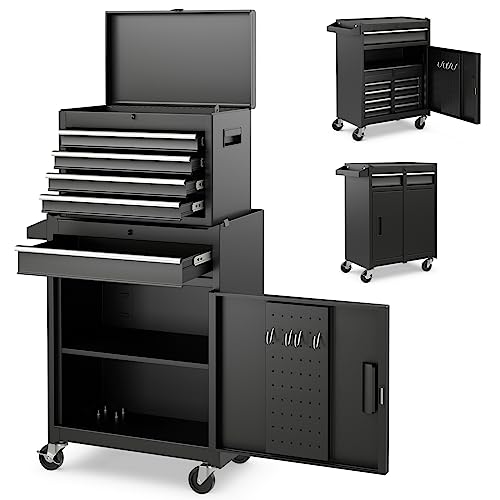


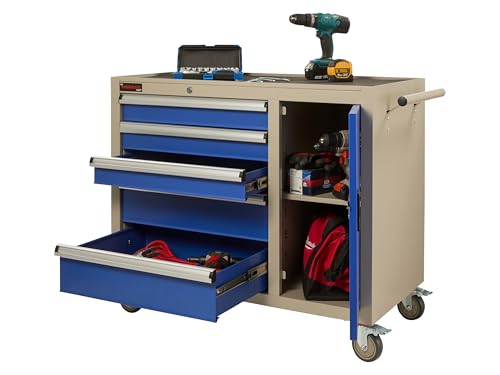


Tool cabinet buying guide: picking the right roller cab or wall unit
This short tool cabinet buying guide is here to help you match the models above to your needs. Tool cabinets range from small wall-mounted units for a garage to full roller cabs with a top chest for a busy workshop. The key things to consider are how many tools you own, how much floor space you have, how often you need to move the unit and how much weight it has to carry.
Types of tool cabinets
Roller cabinets: multi-drawer units on castors, usually with locking wheels and a side handle. They are the standard choice for mechanics and anyone who wants tools close to the job. A rolling tool cabinet with a top chest on it gives you a complete workstation.
Top chests: smaller units with shallow drawers that sit on a bench or on a roller cab. Good for sockets, spanners and small hand tools.
Cupboard-style cabinets: steel or plastic units with doors and adjustable shelves. Better for power tools, cases, paint and consumables than lots of small items.
Wall-mounted and parts cabinets: compact units with many clear compartments for screws, fixings and electrical parts. They free up bench space in smaller workshops.
Modular and combination units: several cabinets that bolt or clip together, so you can add sections as your collection grows.
Features to look for
Construction and drawer slides make the biggest difference to how a unit feels after a few years. Look for powder-coated steel of a decent gauge, as thin sheet flexes and dents. Ball-bearing slides run smoothly under load, while cheaper friction slides tend to stick once the drawers are full. Check the load capacity per drawer as well as the total, especially if you plan to store heavy power tools.
Other useful features include a central locking system so one key secures every drawer, anti-tip mechanisms that stop more than one drawer opening at once, drawer liners that protect tools and stop them sliding, and a solid worktop. Stainless steel tops are durable and easy to clean, and stainless steel models suit food, marine or wet environments. For portable use, big castors with brakes are easier to move over rough floors than small plastic wheels.
Size, weight and space
Measure the space before buying and allow room for drawers to open fully. Remember that a loaded roller cab can weigh several hundred kilos, so check the castors are rated for that weight. Deep drawers are handy for bulky items, but a mix of shallow and deep drawers keeps more tools in view and is easier to keep tidy. If you are looking for a quick solution in a small garage, a wall unit or a compact portable chest may suit better than a full-size cab.
Durability and value
Budget products can be a good choice for occasional DIY use, but trades who open drawers dozens of times a day should consider heavier construction. Good durability comes from welded frames, proper slides and quality locks. It is worth paying more once rather than replacing a cheap unit twice. For more help choosing, our tool chest buying guide goes into more detail, and our tool boxes and van and workshop ranges cover portable options. You can browse all our tool storage products in one place.
Looking for more options?
A cabinet is not the only answer. If you work away from base, a tool bag or a portable metal toolbox may be the better solution for the tools you carry daily, with a cabinet kept at home for the rest. When weighing up material and durability, a tool bag is lighter and quieter, while a metal toolbox gives better protection against knocks and theft.
Think about the design as a whole before you buy. Consider where the handle sits, whether the castors are heavy duty and how the compartments are laid out. A good layout will ensure the things you reach for most are never buried. Durable products with a sensible design save time on every job.
Tool cabinets FAQ
How do I efficiently organise an empty toolbox or cabinet?Put the tools you use most frequently in the top drawers at waist height and heavy items low down to keep the centre of gravity stable. Group tools by type, and use foam or drawer liners so every tool has a place. Leave one empty drawer free for new tools.
Steel or plastic?Steel is stronger, more secure and suits heavy tools. Plastic units are lighter and will not rust, which makes them a sensible choice for small parts and damp garages.
Are stackable toolboxes and modular cabinets a good investment?If your collection is growing, yes. Choosing a modular range means you can add matching chests and side lockers later instead of starting again.