Grinder Discs
Compared on price, power and value, with prices checked daily against Amazon UK. Not sure where to start? Our buying advice is further down the page.
-
AILIMIAO 5Pcs 75mm Cutting Disc for 10mm Bore Angle Grinder Metal Circular Saw Blade Flat Flap Grinding Wheel Sanding Pads Tool
Original price was: £6.58.£6.19Current price is: £6.19. -

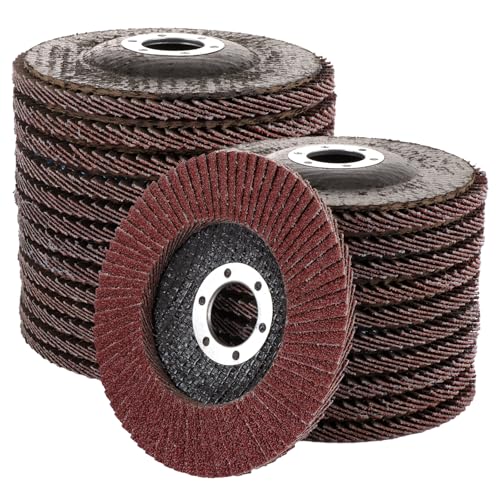
ASelected Flap Discs 115mm 20 Pack Grinding Discs
£15.87 -
Blue Spot Tools 19656 115mm (4.5inch) Metal Grinding Disc
£3.82 -
Bosch 10x PRO Inox/Metal Bonded Cut Disc Long Life 22.23mm
Original price was: £16.11.£12.75Current price is: £12.75. -
Bosch 10x PRO Inox/Metal Bonded Thin Cut Disc Long Life, X-Lock
Original price was: £14.39.£11.13Current price is: £11.13. -
Bosch 1x EXPERT Carbide Multi Wheel Cutting Disc for Small Angle Grinders (for Hardwood, Wood with nails, Ø 115 mm, Professional Accessory Small Angle Grinder)
£13.50 -
Bosch 1x EXPERT Carbide Multi Wheel Cutting Disc for Small Angle Grinders (for Hardwood, Wood with nails, Ø 125 mm, Professional Accessory Small Angle Grinder)
£16.00 -
Bosch 1x Inox/Metal Cut Disc Long Life 22.23mm
£3.79 -
Bosch 1x PRO Metal Bonded Cutting Disc, Bore 22.23 mm, oSa
Original price was: £1.21.£1.08Current price is: £1.08. -
Bosch 1x PRO Metal Bonded Grinding Disc, Bore 22.23 mm, oSa
Original price was: £2.18.£1.55Current price is: £1.55. -
Bosch 1x PRO Metal Bonded Grinding Disc, Bore 22.23 mm, oSa
£5.40 -
Bosch 1x PRO Stainless Steel and Metal Bonded Cutting Disc, Bore 22.23 mm
£6.09 -
Bosch 1x PRO Stone Bonded Cutting Disc, Bore 22.23 mm
Original price was: £1.45.£1.19Current price is: £1.19. -
Bosch 5x PRO Inox/Metal Bonded Cut Disc f. Mini Grinders 10mm
£6.98 -
Bosch Professional 1x Standard for Metal Cutting Disc (for Metal, Ø 125 x 1,6 x 22,23 mm, Straight, Accessory Angle Grinder)
£1.39 -
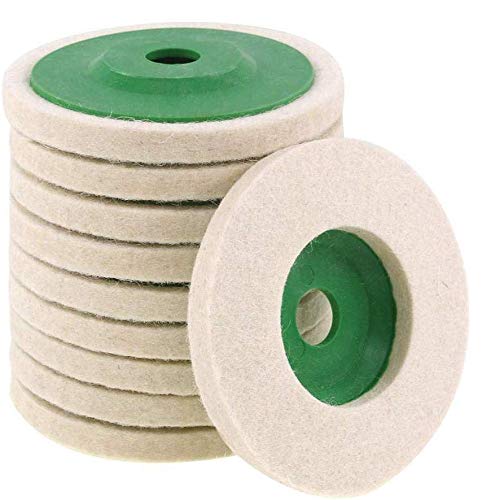
CviAn Wool Buffing Wheels Set, 10pcs Wear-Resistant Angle Grinder Wheels, 4" Diameter, Fine Polishing/Waxing for Glass, Metal, Car, Wood, Marble, Stainless Steel Crafts
£7.99 -
DeWalt DT42340TZ Stainless Steel Flat Cutting Disc, 125 mm x 1.2 mm (Pack of 10)
Original price was: £17.79.£9.99Current price is: £9.99. -
Dunnet Tools Heavy Duty Flap Disc for Angle Grinder 80 Grit Aluminium Oxide
£5.99 -
Dyna-Living 30Pcs 115mm Fiber Discs for Sanding & Grinding
£16.99 -
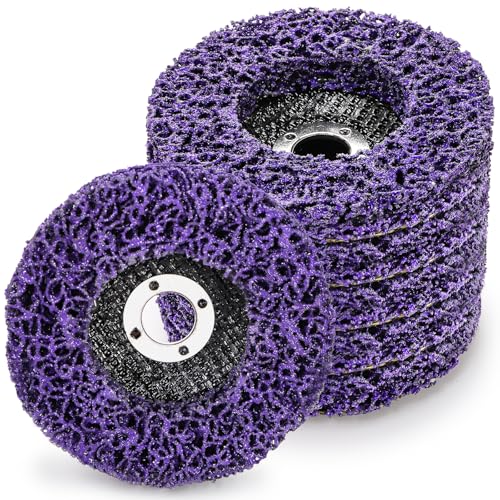
Elsjoy 6 Pack Strip Discs Stripping Wheel for Angle Grinder, 100mm 4inch Rust Remover Wheel Grinder Paint Stripping Wheel, Paint Removal Disc, Clean and Remove Scaling and Oxidation
£13.99





Angle grinder discs explained: picking the right one for the job
Here are angle grinder discs explained in plain terms. The grinder itself is simple, but the disc you fit decides what it can do and how safely it does it. One machine can cut steel, grind welds, remove old paint and rust, or polish a finished surface, as long as you match the disc to the task.
This guide covers the common types, how to pick a size and the safety basics. If you are still choosing a machine, our angle grinder buying guide is a good place to start.
The main types of disc
Thin cut-off discs are around 1mm thick and are designed to slice through steel, stainless, rebar and box section with very little waste. Look for INOX rated versions for stainless.
Grinding discs are thicker, typically 6mm, and are used flat against the work to grind down welds, bevel edges and take off heavy material. Never use a thin cut-off disc for grinding, as side loads can shatter it.
Flap discs are made of overlapping abrasive flaps and blend, deburr and finish in one go. They are ideal for smoothing welds and tidying edges. Lower grits such as 40 or 60 take off material fast, while 80 and 120 leave a smoother surface.
Wire brush cups and wheels strip old paint, rust and scale without removing much base material. A twisted knot wire brush is more aggressive than a crimped one.
Diamond cutting and cup discs are for stone, brick, tile and concrete. Our diamond discs cover these in more detail.
Polishing pads and backing pads allow you to use hook and loop abrasives, wool or felt for polishing paintwork, stone and stainless.
Cutting and grinding are different jobs
The simplest rule is that each disc is designed for one type of work. Cutting and grinding discs are marked on the label with their uses, and the shape tells you a lot too. Flat Type 41 discs are for cutting. Depressed centre Type 27 discs are for grinding and leave room for the nut. Stick to what the label says.
Size, bore and power
Most small grinders in the UK take 115mm or 125mm discs with a 22.23mm bore, while large corded angle grinders take 230mm. Mini cut-off tools use 76mm discs on a 10mm bore. Always check the disc size, bore and maximum speed match your machine. A bigger disc on a small machine is a serious safety risk, as it will spin faster than it is rated for. Cordless angle grinders are typically 115mm or 125mm and suit most site tasks, while corded angle grinders give more power for long cuts and heavy grinding. Both types of angle grinders take the same discs at a given size.
Changing a disc safely
Unplug the grinder or remove the battery first. Press the spindle lock, undo the flange nut with the key, fit the new disc the right way round and tighten the nut by hand plus a little with the key. Release the spindle lock and run the grinder for a few seconds at arm’s length before you start work. Keep the guard fitted and set between you and the disc.
Safety basics
Wear eye protection, gloves and hearing protection, and a dust mask when grinding stone or old paint, which may contain lead. Clamp the work, keep both hands on the tool and stand to one side of the line of the disc. The HSE has guidance on abrasive wheel safety, and our angle grinder safety guide covers common mistakes.
Angle grinder discs: frequently asked questions
Do grinding discs expire? Resin bonded discs do age, and many carry an expiry date on the centre ring, usually around three years from manufacture. Store them flat and dry, and bin any that are damp, chipped or out of date.
Which size grinder is best for home use? A 115mm grinder is light, easy to control and takes the widest range of discs.
What should I use to remove rust or paint? A wire brush cup or a flap disc. Wire is better on uneven surfaces, flap discs on flat steel.
What should I use to cut tiles or marble? A continuous rim diamond disc gives the cleanest edge. Browse more in our power tool accessories.