Spanner Sets
Compared on price, power and value, with prices checked daily against Amazon UK. Not sure where to start? Our buying advice is further down the page.
-

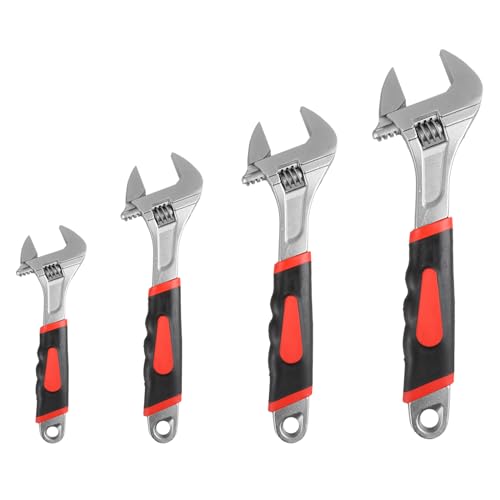
AHAQU 4PCS Adjustable Spanner Set, 4 Sizes Heavy Duty Adjustable Wrench Set Include 6in/8in/10in/12in, Metric & SAE Carbon Steel Shifter Spanners with Soft Grip Handle for Maintenance Repair
£17.99 -
Amazon Basics Flexible Ratcheting Wrench Set – Metric, 5-Piece, 8mm, 10mm, 13mm, 14mm, and 17mm
£18.53 -
Amazon Basics Ratcheting Wrench Set- 10- Piece
£46.66 -
Amtech K0400 Combination Spanner Set, Drop Forged and Chrome Plated Spanners, 6mm to 19mm
£9.25 -
Amtech K0425 Combination Spanner Set, 11 Pieces Chrome Plated, Corrosion Resistant, Supplied with Storage Rack, 6mm-19mm
Original price was: £11.99.£9.99Current price is: £9.99. -
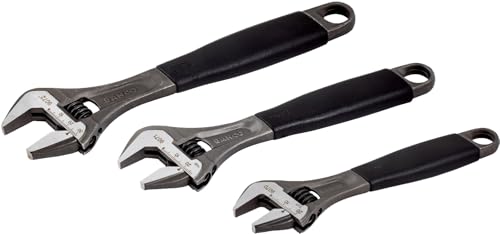
Bacho Alloy Steel Metric Adjustable Wrench Set (Pack of 3)
£52.99 -
Bahco 111MSET12 Combination Spanner Metric with Chrome Polish (Set of 12)
£64.95 -
BGS 1192 | Combination Spanner Set | 6 – 19 mm | 8 pcs.
£14.69 -
BGS 1195 | Combination Spanner Set | Inch Sizes | 1/4" – 15/16" | 12 pcs.
Original price was: £23.80.£22.53Current price is: £22.53. -
BGS 1197 | Combination Spanner Set | 6 – 22 mm | 12 pcs.
£20.51 -
BGS 30551 | Combination Spanner Set | 4 – 10 mm | 9 pcs.
£13.53 -
BGS Diy 1232 | Combination Spanner Set | 6 – 22 mm | 12 pcs.
£17.87 -
BGS Diy 1233 | Double Open End Spanner Set | 6 x 7 – 30 x 32 mm | 12 pcs.
£19.07 -
BLOSTM Flexible Ratchet Spanner Set 12 PCS – Combination Spanner Set 8-19mm
£29.99 -
BLOSTM Ratchet Spanner Set – 7 PCS Metric Spanner Set 8-17mm
Original price was: £25.29.£19.39Current price is: £19.39. -
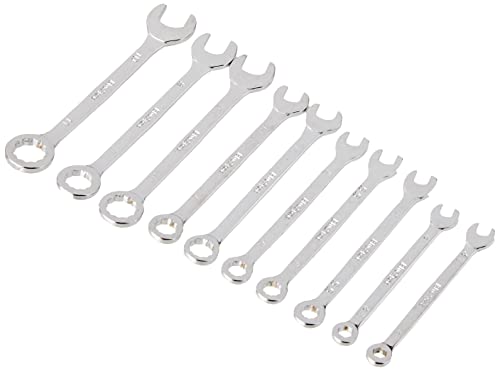
Blue Spot 4311 Micro Combination Spanner, Silver, Set of 10 Piece
Original price was: £10.93.£7.64Current price is: £7.64. -
Blue Spot Tools 04124 Extra Long Combination Spanner Set – Silver (12-Piece)
£26.79 -
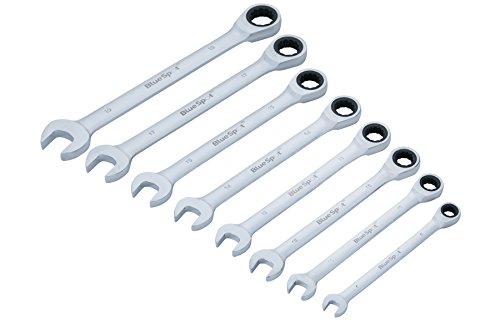
Blue Spot Tools 04310 8 Piece Metric Ratchet Spanner Set (8-19mm), Chrome Vanadium Steel, 5° Fine Ratchet Action
£19.50 -
Blue Spot Tools 04312 6 Piece Flexible Head Metric Ratchet Spanner Set (8-17mm), Chrome Vanadium Steel, 8° Fine Ratchet Action
£19.50 -
Bluespot 04112 32pce Metric/Imperial Assorted Spanner Set (6-19Mm)(1/4"-5/8")
£26.89







Choosing the right spanner sets for the garage and site
A good collection of spanners is one of the most used hand tools in any kit. Buying them as a matched collection saves money over picking sizes one by one, keeps everything in one roll or case and means the size you need is there when you reach for it. Here is how to choose a selection that suits the work you do, from car maintenance to plumbing and machinery.
Types of spanners in a typical kit
Combination spanners: the most popular choice, with an open jaw one side and a closed 12-point ring the other. A combination kit from 8mm to 19mm covers most car and bike work.
Open-ended spanners: two different sizes per tool, useful for quick spinning of nuts and getting onto pipe fittings.
Ratchet spanners: a ratcheting ring speeds up work in limited access spaces where you cannot lift and reposition. Flexible heads help even more.
Flare nut spanners: a partly closed jaw that grips soft brake and fuel line nuts without rounding them.
Adjustable wrenches: one tool that covers many sizes. Handy as a backup, but not a replacement for a fixed spanner on a tight fastener.
Box spanners: tubular spanners for deep nuts such as immersion heaters and basin taps.
What to look for
Check the size range against the jobs you do most. Metric sizes from 6mm to 22mm suit most modern vehicles and machinery, while older British cars and some American products still use imperial. Chrome vanadium steel with a polished or satin finish is easy to wipe clean and resists rust. Clear size marking, a slim ring head and an offset angle all make working in tight engine bays easier. A wide jaw or extra long reach version is worth adding for plumbing and larger nuts.
Storage matters too. A rack or roll lets you see at a glance if something is missing, so you are more likely to keep the kit complete.
Spanners or sockets?
Spanners get into places a ratchet and sockets cannot, such as brake pipes, nuts on long threaded studs and fittings behind panels. Sockets are quicker on exposed bolts. Most mechanics keep both, and our guide to the best socket set for mechanics explains how they work together. For bolts that need a set torque, use proper torque wrenches rather than guessing; see our torque wrench buying guide.
Care and safety
Always pull a spanner towards you rather than pushing, so your knuckles are safe if it slips. Use the ring side for breaking a nut loose and the open jaw for running it down. Never add a scaffold tube or pipe for extra leverage, as it can split the jaws or round the fastener. Wipe tools clean after use to keep them in good condition.
Spanners FAQs
Spanners vs wrenches: what’s the difference?Mostly language. In the UK, a spanner is a fixed-size tool and a wrench usually means an adjustable or a pipe wrench. In the US, both are called wrenches. The job they do is the same.
Which tool wins where?Fixed spanners give the best grip and are easy on fasteners. Adjustable wrenches save space in the bag, and locking pliers are a last resort for damaged nuts.
Is it cheaper to buy a kit?Usually, yes. The price per piece is much lower than buying separately, and you save time shopping for missing sizes later. Individual sizes are in our spanners range, and the full hand tools section has everything else for the toolbox.