Soldering
Compared on price, power and value, with prices checked daily against Amazon UK. Not sure where to start? Our buying advice is further down the page.
-

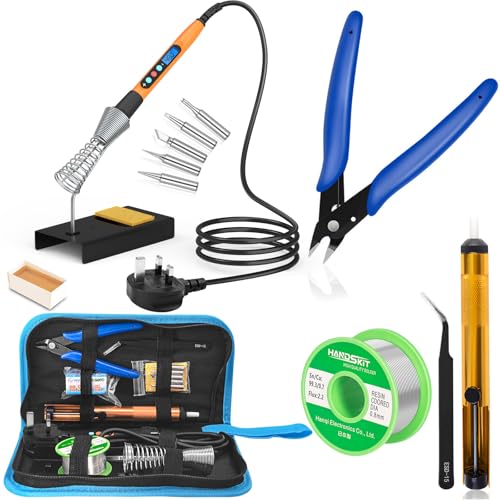
HANDSKIT 90W LCD Soldering Iron Kit, Adjustable Temperature 180-480°C
£15.97 -
HANDSKIT Soldering Iron Kit Electric, Soldering Iron 90W Welding Tools
£13.99 -
HANDSKIT Soldering Iron Kit, 90W Adjustable Temperature 180-480°C
Original price was: £17.99.£13.50Current price is: £13.50. -
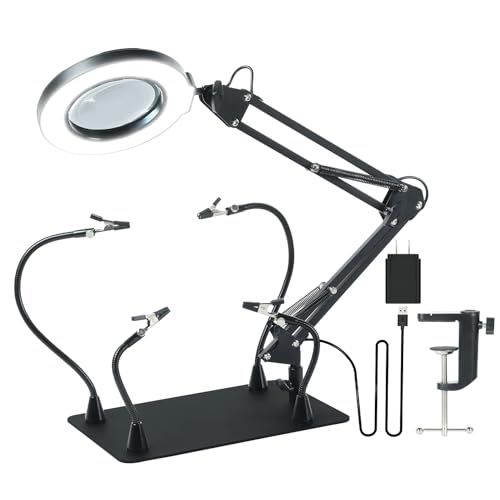
Helping Hands Soldering Station PCB Holder with Magnetic Arms,Circuit Board Holder 10X Magnifying Glass with Light Stand LED Lamp with Clamp, 5 Colors 10 Lights for Electronics, Crafts, Repairs
Original price was: £45.99.£39.99Current price is: £39.99. -
Helping Hands Soldering Station, Lytool Third Hand Soldering Tool
Original price was: £23.99.£22.79Current price is: £22.79. -
How to Solder Electronics: 15 Rules for Successful Soldering: A Complete Beginners Guide (SRA Solder Guides)
£7.34 -
HPFIX Premium Heat Resistant 932°F 22''x 14.2'' Magnetic Silicone Soldering Mat Electronics Work Mat for Computer Cell Phone Laptop Repair,BGA Soldering Gun Iron Workbench Protection
£21.99 -
Lytool 60W Soldering Station, Soldering Iron with 3Inch LCD Display Digital
Original price was: £39.99.£31.44Current price is: £31.44. -
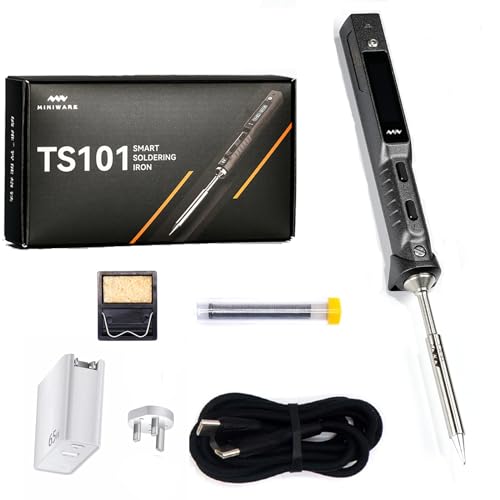
MINIWARE TS101 Soldering Iron Power Supply Kit UK PD 65W I Tips Set Original Smart Digital Mini Portable Fast Heating Adjustable Temperature
£79.00 -
MMOBIEL Soldering and Repair Mat Silicone – 30 x 20 cm Heat-Resistant up to 500°C (932°F) –Workbench Mat for Soldering, Cell Phone and Electronics – Silicone Mat with Heat Insulation – Blue
£5.99 -
Monument 2350x Soldering and Brazing Pad 12 X12in
£25.43 -
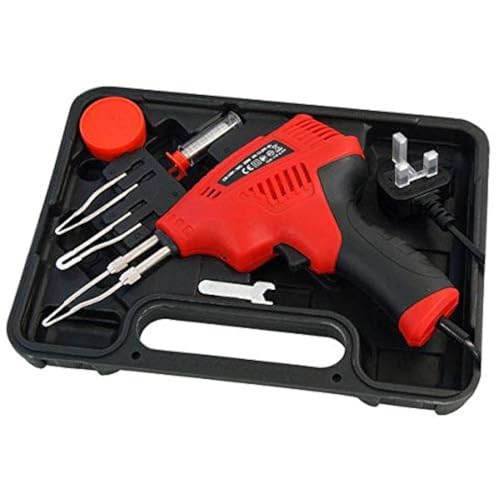
Neilsen CT1842 230V Soldering Gun Kit – 200W, 50Hz, LED Light, Extra Tips & Solder, Ideal for Electrical & DIY Repairs
£29.99 -
New flux soldering paste in the 100g tin for electronics SMD plumbing DIY et
£9.39 -
Preciva 2-in-1 Hot Air Gun Rework and Soldering Iron Station with ℉/℃, Cold/Hot Air Conversion, Solder Station with Digital Temperature Correction and Sleep Function
£79.99 -
Preciva 927II Soldering Station, 130W Fast Heating Soldering Iron Kit
£39.99 -
Professional Soldering Paste with 10g Flux for Mobiles, Appliances & Computers – No-Clean Solder Grease Ideal for Welding & Mechanic Maintenance
£3.39 -
QUIMTECH Liquid Solder Flux (30 ml) I Liquid Solder Flux I Soldering Flux I Electrical Solder I No Clean Liquid Flux I Rosin Flux I Soldering Flux for Electronics I Lead Free Liquid Solder I
£10.37 -
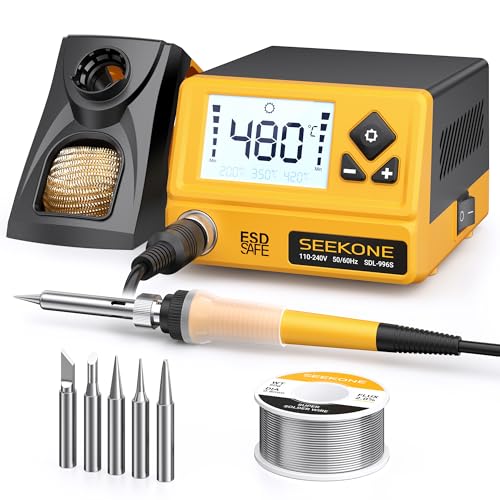
SEEKOEN 60W Soldering Iron Station 200℃-480℃ with 5 Extra Iron Tips
£31.99 -
Silverline Soldering Iron 40W UK (263572)
Original price was: £15.81.£12.74Current price is: £12.74. -
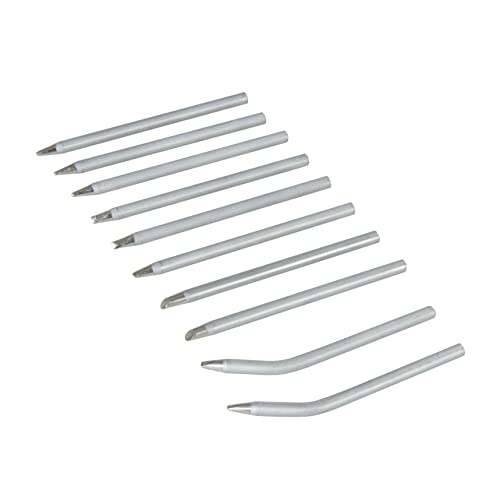
Silverline Soldering Iron Tips Set 10pce 40W (675071)
£8.31









Choosing the right soldering irons and stations
Whether you are fixing a loose wire on a guitar pedal, fitting LED strip or repairing a circuit board, the right iron makes neat, reliable joints far easier. This range covers basic plug-in irons, temperature-controlled stations, hot air rework units and the accessories that go with them, so here is how to choose without overspending.
Types of iron
Basic plug-in irons: fixed temperature, low cost and fine for occasional general jobs like joining wires.
Adjustable irons and stations: let you set the heat to suit the job, with a stand and sponge or brass cleaner. Ideal for regular electronics work, as the right temperature protects delicate components.
Cordless and battery models: handy on site or in the van. A cordless soldering iron runs on gas or a rechargeable battery, so check run time if you need it for a full working day. Our cordless soldering irons range has more options.
Hot air rework stations and hot tweezers: for removing and fitting SMD parts on circuit boards, where a standard tip is too clumsy.
Power, temperature and heat-up
Wattage tells you how quickly an iron recovers heat when it touches a joint. Around 25W to 40W suits fine electronics, while 60W to 80W handles thicker cable and connectors. Most electronics work sits between 300°C and 370°C for lead-free solder. Many modern models offer fast heat-up, reaching working temperature in under a minute, while cheaper fixed irons can take a few minutes.
Tips, handle and accessories
A smaller tip, such as a fine conical or 1mm chisel, is best for precision soldering on boards, while a wider chisel transfers more heat to cable joints. Check replacement tips are easy to buy and kept in stock, as they wear over time. A slim, cool handle reduces fatigue, and a helping hands clamp, flux, a silicone mat and a magnifier make the work far easier.
Safety and fume extraction
Rosin flux gives off fumes that you should not breathe in. Work in a ventilated space and use fume extraction or a small bench fan with a filter if you solder every day. Always return the iron to its stand and switch it off after use.
Soldering irons FAQs
How fast do soldering irons heat up?Basic irons can take two to five minutes. Temperature-controlled stations and USB-C irons often reach temperature in 10 to 60 seconds.
Are cheap soldering irons okay?For basic jobs, yes. For precision soldering or regular use, a temperature-controlled model is worth it, as cheap irons can overheat and damage components.
What’s the difference between a gas and electric soldering iron?Gas irons are fully portable and ideal on site, but harder to control precisely. Electric models give steadier temperature and suit bench work.
Will one iron cover both wiring and plumbing jobs?Not really. Copper pipe joints need a blowtorch, not an electronics iron. Electricians on site usually carry a gas or battery iron for cable work, and our guide to what tools electricians need covers the rest. Browse our full hand tools range or the strippers and crimpers section for wire prep.