A grinder disc can be turning at more than 10,000 rpm before it touches the job. At that speed, a poor setup is not a minor inconvenience – it can turn a straightforward cut into a serious incident. Good angle grinder safety comes down to choosing compatible equipment, setting it up properly and keeping control from the first trigger pull to the final spin-down.
Whether you are slicing paving slabs, removing welds, trimming steel or cleaning up masonry, an angle grinder deserves the same care as any powerful construction tool. It is compact, versatile and highly effective, but it will not forgive a damaged disc, an unsecured workpiece or a missing guard. It is also important to understand that the hazards do not shrink on small jobs. A five-minute task uses the same spinning disc as a five-hour one.
Start With the Right Grinder, Guard and Disc
Match the Disc to the Task
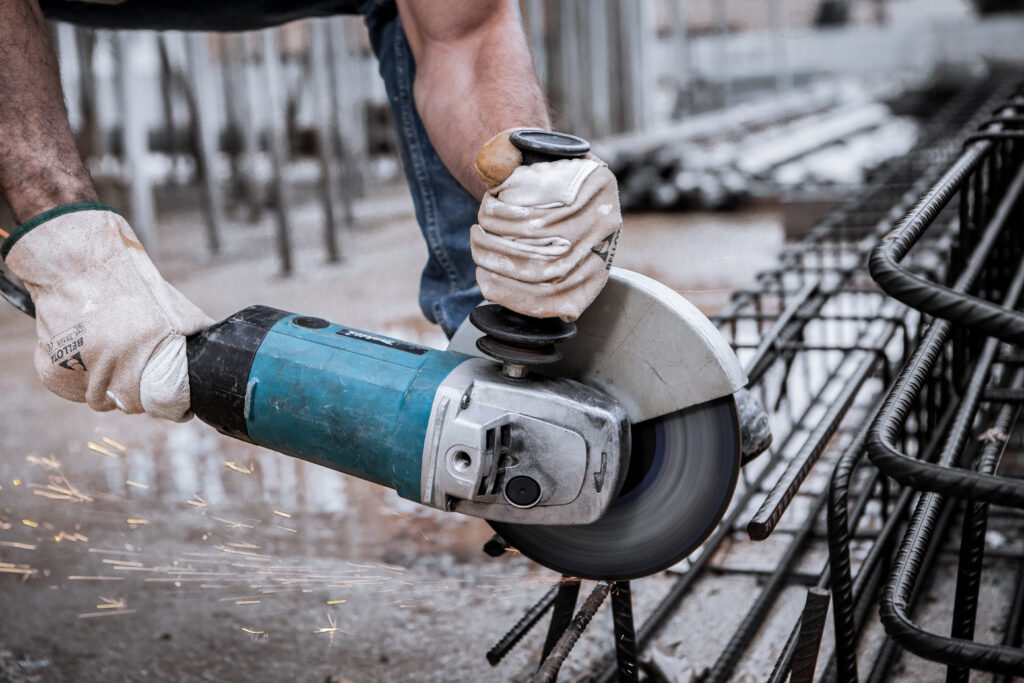
The disc must suit both the task and the grinder. A cutting disc is thin and designed to work on its edge. A grinding wheel is thicker and intended to work on its face. Flap discs are useful for controlled finishing and weld blending, while diamond blades are made for suitable masonry, concrete or tile applications. Using the wrong accessory affects finish quality, but more importantly, it greatly increases the chance of disc damage or kickback.
Check Speed Rating and Diameter
Check the maximum RPM marked on every disc before fitting it. Its rated speed must meet or exceed the no-load speed shown on the grinder’s rating plate. Diameter matters too. A 230 mm disc must not be fitted to a smaller 115 mm or 125 mm machine simply because it appears to fit the spindle. The guard, flanges and power of the tool are designed around a particular disc size.
Keep the Guard Fitted and Adjusted
Keep the correct guard fitted and adjusted between you and the disc. Guards are there to direct sparks and help contain fragments if an abrasive wheel fails. Removing one for a little extra access is never a worthwhile trade-off. If the job cannot be completed safely with the standard guard, use an accessory or tool designed for that application instead.
Guards are not all the same, either. The guard for a grinding wheel is not necessarily the right one for a diamond blade or a cut-off disc, so check the manual for what your machine and accessory require.
Inspect Old and New Discs Alike
Inspect every disc before use. Reject any disc with cracks, chips, heavy wear, contamination or damage around the centre hole. Do not use a disc that has been dropped, stored carelessly in damp conditions or left loose in the bottom of a tool bag.
An old disc that has sat in a van or shed for years deserves particular suspicion. Abrasive discs are consumable items with a shelf life, so check for an expiry date on the disc or packaging and do not keep using one until it fails.
Angle Grinder Safety Checks Before You Start
The Pre-Use Checklist
A two-minute check is one of the best habits a professional or serious DIY user can build. Disconnect a corded grinder from the mains, or remove the battery from a cordless model, before changing discs or making adjustments. Then confirm the following:
- The disc is correct for the material and application, undamaged and within its marked speed rating.
- The guard is secure, correctly positioned and matched to the disc type.
- The backing flange, locking nut and supplied pin spanner are being used as intended by the manufacturer.
- The side handle is fitted and firmly tightened, unless the tool is specifically designed for its intended task without one.
- The workpiece is clamped or otherwise secured so it cannot move, roll or pinch the disc.
Mount the Disc Correctly
Avoid overtightening the locking nut. Fit the disc cleanly and correctly, then tighten it in line with the tool instructions. A disc that is mounted off-centre can vibrate heavily, wear unevenly and feel difficult to control.
Choose a Safe Work Location
Also look around the work area. The location you pick matters as much as the tool. Clear away loose leads, fuel, solvents, sawdust and other flammable materials. Sparks can travel further than expected, particularly when cutting steel, so think about where they will land before you start.
On a busy site, make sure nobody is standing in the line of sparks or where they could be hit if the tool kicks back. That includes any member of the public passing the work area. Barriers or screens, and a clear spot for the cable to run behind you, are worth setting up before the disc spins.
Wear PPE That Matches the Job
Protect Your Eyes and Face
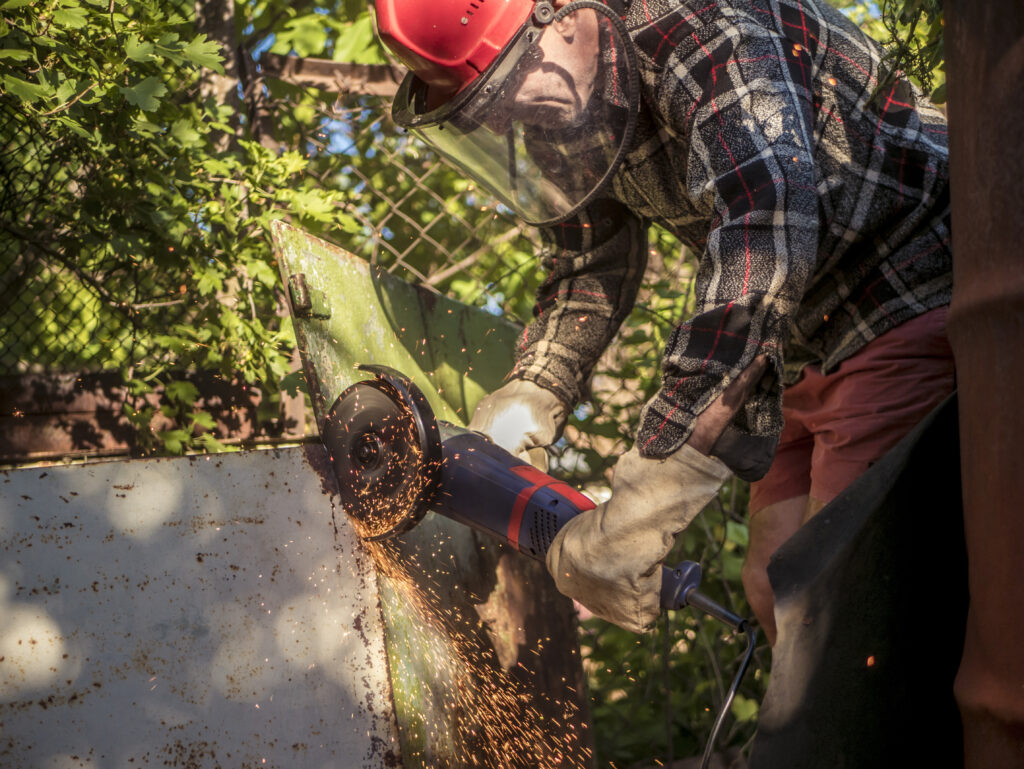
Eye protection is non-negotiable. Wear suitable safety glasses or goggles, and add a face shield for extra protection where there is a risk of flying fragments. A face shield supports eye protection – it does not replace it. The face is the part most exposed to a disc that breaks up or throws debris, so do not rely on a single layer.
When removing welds or working near welding repairs, remember that sparks and hot particles can bounce around the face and neck. A shield with a wide visor and close-fitting collar gives better coverage than glasses alone.
Hearing, Hands and Clothing
Grinding is noisy enough to warrant hearing protection, especially during longer jobs or repeated daily use. Strong workwear, safety footwear and close-fitting gloves can protect against sparks, sharp edges and hot material, but avoid loose gloves, sleeves, jewellery or clothing that could catch on a rotating accessory.
Vibration is another cost of long sessions. On extended jobs, pause regularly, and take a proper break at least once an hour as a sensible rule of thumb. Tingling or numb fingers are a sign to stop and seek advice.
Control Dust at Source
Dust needs equal attention. Cutting concrete, mortar, stone and similar materials can release respirable crystalline silica, which is hazardous when breathed in. Use suitable dust extraction where possible and wear respiratory protection selected for the material and level of exposure. Working outdoors is helpful, but it does not remove the need to control dust at source.
Use a Stable Stance and Keep Both Hands on the Tool
Stance and Start-Up
The grinder should be held with two hands whenever its design allows: one on the main body and one on the auxiliary handle. This gives you far better control if the disc snags or the tool changes direction suddenly. Set your feet apart, stay balanced and position yourself so that you are not directly behind the disc’s likely path of travel.
Before starting the cut, let the disc reach full speed. Hold the tool clear of the material and listen for unusual vibration, wobble or noise. If anything feels wrong, stop immediately, isolate the tool and inspect the disc and mounting arrangement.
Making a Straight, Controlled Cut
Keep the disc straight in the cut and avoid twisting it sideways. Thin cut-off discs are particularly vulnerable to side pressure. Let the abrasive do the work rather than forcing the tool forward.
If the cut begins to close and trap the disc, stop and support or reposition the workpiece rather than trying to power through it. Heat can make metal expand as you work, and a long cut in a poorly supported bar or sheet can pinch the disc part-way through. Support both sides of the line so neither piece drops or squeezes the wheel.
Grinding and Finishing
For grinding, present the disc at the angle recommended for that accessory, commonly around 15 to 30 degrees for a depressed-centre grinding wheel. Do not use the side of a cut-off disc for grinding. It is not built for that load. The same principle applies to specialist accessories: only use them in the manner stated by their manufacturer.
Understand Kickback
Kickback usually happens when the disc binds, catches an edge or is forced into material at the wrong angle. The tool is then thrown back towards you, or sideways, faster than you can react. A firm grip, clear stance, correct guard position and controlled pressure all reduce the risk. They also make cleaner work possible, which saves time on finishing.
Know When the Tool or Accessory Is Not Suitable
Choose a Better Tool When the Job Demands It
Angle grinders can cover an impressive range of jobs, but versatility has limits. Do not fit improvised accessories, unapproved blades or wood-cutting attachments that are not specifically designed and guarded for the grinder in use. A tool that is excellent for cutting steel is not automatically a safe choice for shaping timber.
For long, precise cuts in sheet material, a circular saw, mitre saw or jigsaw may offer better control. For enclosed spaces, dust-heavy work or tasks close to finished surfaces, an alternative tool may also reduce risk and produce a better result. Choosing the right tool is part of professional standards, not a sign that the grinder is underperforming.
Cordless and Corded Machines
Cordless angle grinders bring valuable freedom on site, but the same checks apply. Use the battery platform and charger approved for the tool, inspect batteries for damage and keep them away from heat, water and metal debris.
With corded machines, use a suitable extension lead, keep cables behind the work line and never operate in wet conditions unless the equipment and environment are explicitly rated for it. Check the lead for nicks and damage each time, as old, worn cable is easy to catch with a disc.
Finish the Job Safely
Let the Disc Stop
When the cut or grinding pass is complete, release the trigger and keep hold of the tool until the disc has stopped completely. Never put a grinder down while the accessory is still rotating. Place it on a stable surface with the disc clear of obstructions, then isolate the power before changing accessories or leaving the work area.
Deal With Heat and Debris
Hot metal and discs can cause burns long after the grinder is switched off. Mark or move hot workpieces where practical, and check the surrounding area for smouldering debris after spark-producing work. This matters in garages, workshops and renovation projects just as much as on a commercial site. Put the grinder away only once the disc has cooled, with the guard still in place.
Training, Supervision and Staying Up to Date
Why Training Matters
Even users with years of experience can be caught out by a snagged disc. Training is not only for beginners. In the UK, employers have duties to make sure people using work equipment are adequately trained and supervised. A good course covers disc selection, mounting, inspection and the correct way to hold and control the tool, and gives you a chance to practise under supervision.
Read the Safety Messages on the Tool
The safety messages printed on the disc, the machine and the manual are worth reading properly. Warning labels, maximum speed markings and the instructions for fitting flanges all exist because of known failure modes. If a label is worn away or the manual has gone missing, replace it before the next job.
Share What You Learn
Every new team member should be shown the setup routine, not left to pick it up. Online forum threads can be a useful place to compare techniques and ask about a tricky job, but treat a forum post as an opinion, not a substitute for the manufacturer’s instructions. If advice contradicts the manual, follow the manual.
A quality grinder, correctly matched accessories and dependable PPE give you the right foundation, but safe results come from the routine you build around them. Treat every disc change and every first cut as a setup worth checking. As your skills expand, keep the habit of stopping to think before you start, and you can tackle demanding work with far greater confidence.